Australia Charts Five Years for Its Olive Industry
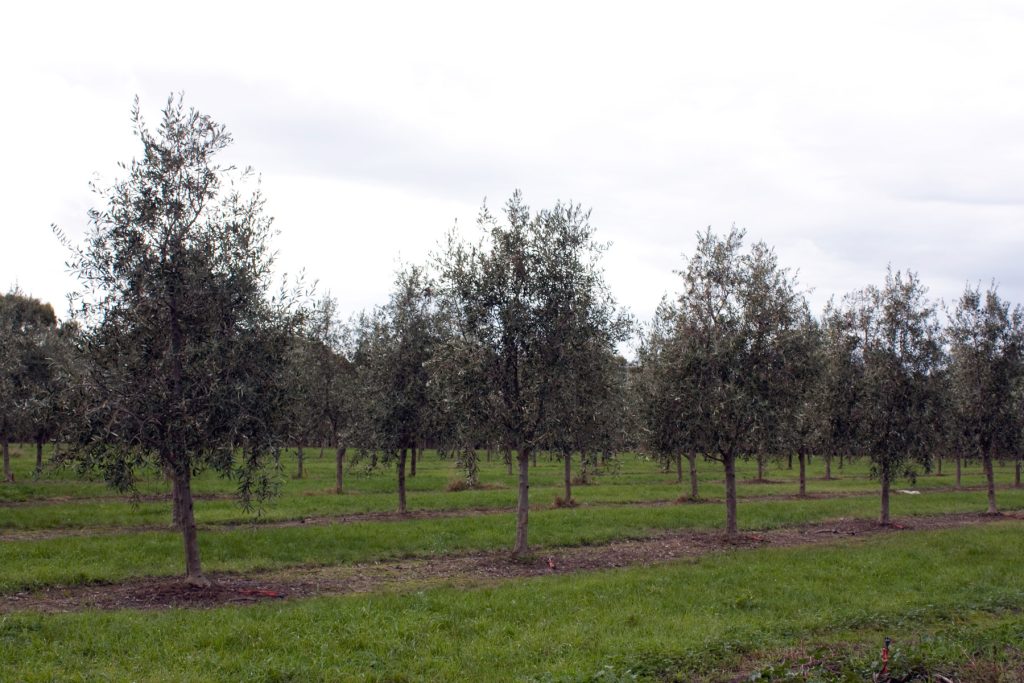
Australia’s Rural Industries Research and Development Corporation has published a five-year research plan for the country’s olive industry, warning that an industry which went from 2,500 tonnes of oil in 2004 to about 15,000 tonnes last year is likely to flatten unless drought, water, climate variability, consumer confusion and export competition are dealt with. This note covers what the plan says, who it is aimed at, and what it admits about the state of the business.
What the plan says
The Australian Olive Industry Research, Development and Extension Plan for 2010 to 2015 was reported on August 31. It describes an industry reborn around 1995 that has moved from a cottage activity to a technically sophisticated one, and expects to reach maturity by the end of this decade. Last season’s output was put at roughly 15,000 tonnes of oil and about 3,200 tonnes of table olives, with a combined retail value above 185 million Australian dollars.
It sets out four objectives: market research and product development; an economically and environmentally sustainable industry; dealing with climate change and variability; and communication, coordination and training. Each has strategies that will become research projects. Among the first priorities are studies of what makes consumers buy olive oil, what they think it should be used for, and what they make of packaging other than the traditional heavy dark glass bottle, which is expensive and heavy to ship: light glass, plastics, bag in box, small tins.
What it admits
The plan is blunt about the shape of the industry. One of its authors, Ian Rowe, a founding member and former president of the Australian Olive Association, says fewer than 20 large producers, in north-central Victoria and in Western Australia north of Perth, account for more than 70 percent of national production, and that smaller producers find it hard to compete on supermarket shelves on price. He adds that consumer confusion over what may be labeled extra virgin does not help when a cheaper imported bottle sits next to a local one carrying the same words. The association’s answer to that has been its industry code of practice, which follows the code first set out in 2008.
Rowe also expects growth to level off: new plantings have tapered, and he lists shortage of irrigation water, financial pressure including the exchange rate, climate variability and the collapse of the managed investment schemes as the reasons. Readers who followed the industry’s insistence that the scheme failures would not hold it back will find this a more sober assessment.
| Australian olive industry | Figure |
|---|---|
| Olive oil production, 2004 / last season | 2,500 tonnes / about 15,000 tonnes |
| Table olives, last season | About 3,200 tonnes |
| Combined retail value | More than AU$185 million |
| Share held by fewer than 20 producers | More than 70 percent of production |
| Plan period | 2010 to 2015, four objectives |
The price problem behind it
Paul Miller, president of the Australian Olive Association, ties the strategy to world prices, which are at historic lows. His explanation is that financial pressure in Spain, Greece, Portugal and to some degree Italy is pushing sellers there to move oil for cash flow, and that this makes life difficult for everyone in the chain except the retailers. An Australian grower cannot outlast that on price, which is why the plan spends so much of its attention on quality claims, packaging and consumer understanding rather than on yield.
- Water and climate work is framed as survival strategy, not efficiency.
- Packaging research is really about freight costs and emissions.
- The label argument, extra virgin and what it means, remains the industry’s main commercial lever.
For how the industry got here, see our earlier pieces on the industry’s rebranding and on the government funding boost handed to the association last year.
Read any national olive plan and count how many pages go to growing and how many to selling. When the selling chapters are the long ones, the industry has decided it cannot win on cost and is trying to win on trust instead. That is the right call for Australia, but it only works if the testing behind the label is real. A code of practice with shelf sampling is worth more to an Australian grower than any amount of agronomy.
Sources
- Olive Oil Times, Australia charts five-year course for olive oil industry (August 31, 2010) copy
- RIRDC publication 10-110, Australian Olive Industry RD&E Plan 2010 to 2015