Repotting an Olive Tree: When, What Size Pot, What to Buy
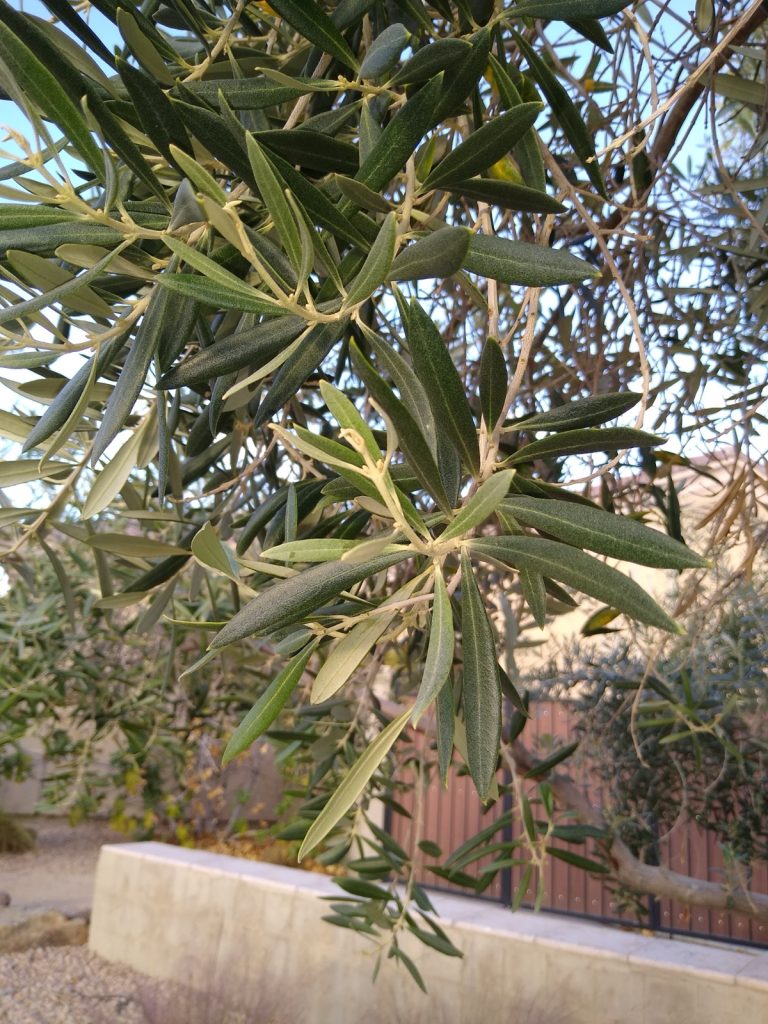
Repotting an olive tree is best done in spring, just as new growth starts, into a pot only one size bigger (about 2 to 4 inches wider) with a gritty, fast-draining mix. Our page on setting up a potted olive tree: pot, soil and spot covers the soil mix and a first pot; this one goes further on the later moves: when, what size at each stage, and what to buy.
When to repot an olive tree
Spring is the right season. Once nights are reliably above freezing and the tree starts pushing pale new shoots, its roots are active and will grow into fresh mix within weeks. Repot in late fall and the roots sit in cold, wet soil until spring, which is the classic way to rot them.
How often depends on age. A young tree in a nursery pot usually needs a bigger pot every 1 to 2 years. A tree that is 5 or 6 years old in a large container can go 3 years or more, and at some point you stop going bigger and refresh it in the same pot instead (more on that below).
The tree tells you when. Look for these signs:
- Roots poking out of the drainage holes or circling on the surface.
- Water runs straight through and out of the bottom within seconds, because there is more root than soil left.
- The mix dries out in a day or two in mild weather when it used to last most of a week.
- The tree is so top-heavy that it blows over in a breeze.
- Growth has stalled for a full season even with good light and feeding.
If the leaves are yellowing or dropping, check the roots before you blame the pot: a wet, sour-smelling root ball is a watering problem, and a bigger pot makes it worse. Our checklist for olive tree leaves turning yellow or dropping walks through that in order.
What size pot for an olive tree
Go up one step at a time. The temptation is to buy the big handsome pot now and be done with it, but a small root ball in a huge volume of mix stays wet long after the roots have drunk what they can reach, and wet roots are what kill potted olives. One nursery size up, or roughly 2 to 4 inches more in diameter, is the rule for young trees.
Nursery pots in the US are sold by gallon size, and most retail olive trees come in 1, 3, 5, 7 or 15 gallon pots. Use this as a rough guide:
| Tree arrives in | Repot into | Typical tree height | Notes |
|---|---|---|---|
| 4 inch or 1 gallon | 2 to 3 gallon (10 to 12 inch pot) | 1 to 2 feet | Plastic is fine at this stage, it is cheap and you will move up again soon. |
| 3 gallon | 5 to 7 gallon (14 to 16 inch pot) | 2 to 4 feet | Good moment to switch to terracotta if you want it. |
| 5 to 7 gallon | 10 to 15 gallon (18 to 20 inch pot) | 4 to 6 feet | From here, think about weight and how you will move it. |
| 15 gallon | 25 gallon or more (24 inch pot and up) | 6 feet and up | Often the last size up. After this, refresh rather than repot. |
Those heights are loose because growers prune differently. If you want a sense of how large your variety will try to get, see how big olive trees get; the slower, compact types in our guide to olive tree varieties are the ones that live happily in a pot for decades.
Choosing the pot material
Every material works if it has a real drainage hole. After that, it is a trade between how fast the mix dries, how much the pot weighs, and whether it survives frost.
- Unglazed terracotta: breathes, dries out fastest, which suits olives. Heavy and can crack in hard frost unless it is sold as frost-proof.
- Glazed ceramic: holds water longer than terracotta, looks good, very heavy. Check that the hole is generous, some decorative pots have a tiny one.
- Plastic or resin: light and cheap, keeps the mix wetter. Fine for young trees and for any tree you move indoors every winter.
- Fabric grow bags: excellent drainage and they stop roots circling, but they dry out quickly in summer heat and look utilitarian.
If the tree spends winters inside, weight decides it. A 20 inch terracotta pot full of wet mix can be more than one person should lift, so pair a heavy pot with a wheeled plant caddy or pick plastic. Our indoor olive tree care guide covers what the tree needs once it is inside.
What to buy before you start
A short shopping list covers it:
- The new pot, with a drainage hole, one size up.
- A gritty, fast-draining mix (the recipe is in our soil page linked above). Buy about one and a half times the new pot’s volume.
- A square of mesh or a coffee filter to keep mix from washing out of the hole. Skip the old layer of gravel in the bottom: it raises the wet zone instead of draining it.
- Clean pruners or an old bread knife for loosening circling roots.
- Pot feet or a caddy so the hole is not sitting in a saucer of water.
You do not need fertilizer on repotting day. Fresh mix carries the tree for a while, and feeding damaged roots does more harm than good. Wait 4 to 6 weeks, then follow the schedule in our olive tree fertilizer guide.
Repotting an olive tree, step by step
Water the tree the day before, so the root ball is moist but not dripping. Then:
- Tip the pot on its side and slide the tree out. If it is stuck, run a knife around the inside edge; do not pull on the trunk.
- Look at the roots. White or tan tips are healthy. If they circle the outside, tease them loose with your fingers or make 3 or 4 shallow vertical cuts down the sides of the root ball.
- Put enough mix in the new pot that the top of the root ball sits about an inch below the rim. Never bury the trunk deeper than it was.
- Fill around the sides, firming gently with your fingers. Do not pack it hard.
- Water slowly until it runs out of the bottom, let it drain, and top up any mix that settled.
- Keep the tree out of hard afternoon sun and wind for about a week while the roots recover.
When the tree is big enough: refresh instead
Sooner or later the pot is as big as you can move or as big as you want. You can keep the tree in it for many years by root pruning every 3 or so years in spring. Slide the tree out, saw or cut about 2 inches off the sides and bottom of the root ball, put fresh mix back into the gap, and return it to the same pot. Thin the canopy lightly at the same time so the reduced roots have less to supply. Done this way, a potted olive can stay the same size for decades.
Garden centers often sell a small tree and a large matching pot as a set, because the pot carries a better margin than the tree. Buy the pot that fits the tree now. The oversized one can wait in the garage for two or three years; a drowned root ball cannot be undone.
Frequently asked questions
What is the best time of year for repotting an olive tree?
Spring, once frost is past and new shoots appear. Roots grow fastest then and settle into fresh mix quickly.
How much bigger should the new pot be?
About 2 to 4 inches wider, or one nursery size up. A much bigger pot keeps the mix wet around a small root ball and invites root rot.
Can I use regular potting soil for an olive tree?
Yes, if you open it up with perlite, pumice or grit so it drains fast. A cactus and citrus mix is a simpler starting point.
Will my olive tree go into shock after repotting?
A few dropped leaves in the first 2 weeks is normal. Keep it out of harsh sun, water when the top inch is dry, and do not fertilize for 4 to 6 weeks.
How do I keep a potted olive tree the same size?
Root prune every 3 or so years: trim about 2 inches off the root ball, add fresh mix and return it to the same pot, then lightly thin the canopy.