The fatty-acid profile: why oleic acid is the hero
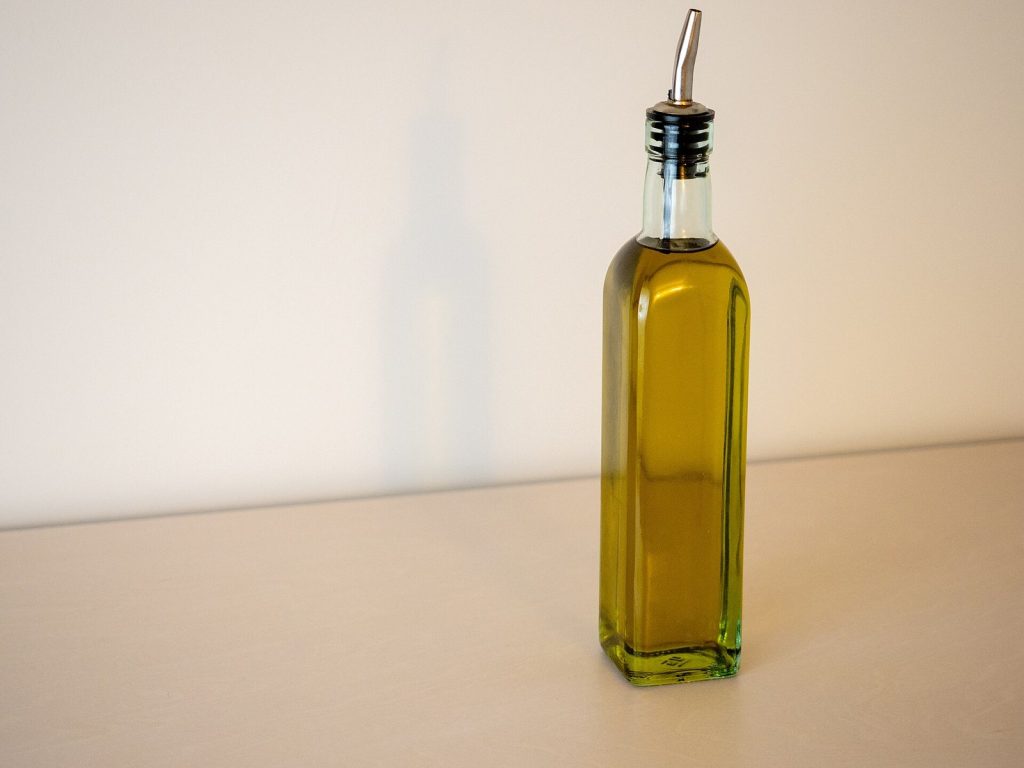
Strip away the phenols, pigments and aromas and what remains — the ninety-nine per cent — is fat, a mixture of fatty acids in proportions that barely other oil can match. One acid rules: oleic. Its dominance explains why olive oil is stable, why it handles heat better than its rivals, and how chemists tell genuine olive oil from a cheap impostor.
Every fat is a blend of fatty acids, and it is the blend that gives each oil its character. Olive oil’s blend is unusual in one decisive way: it is overwhelmingly built on a single monounsaturated acid, oleic acid, which typically makes up somewhere between about fifty-five and eighty-three per cent of the whole. No other everyday cooking oil leans so heavily on this one fat. That single fact underlies a surprising amount of what makes olive oil behave the way it does — in the bottle and in the pan.
One double bond, big consequences
Chemically, the trick is the number of double bonds. Saturated fats have none and are very stable but solid and unhelpful; polyunsaturated fats have several and are fragile, oxidising quickly. Oleic acid, with just one double bond, sits in the sweet spot: liquid at room temperature, yet far more resistant to oxygen than the polyunsaturates. An oil dominated by oleic acid therefore keeps better and tolerates cooking heat better than a seed oil crowded with fragile polyunsaturated fats. The stability you read about elsewhere starts here, in the fatty-acid profile.
The minor acids that matter
Oleic acid does not work alone. Palmitic acid, a saturated fat, usually makes up a chunk of the rest, and linoleic acid, a polyunsaturate, a smaller share. What is most revealing is what should be scarce: linolenic acid, the most fragile of all, is kept naturally low in olive oil — below about one per cent. Many cheap seed oils carry far more. So a linolenic figure creeping above the olive limit is a classic sign that a seed oil has been blended in, which ties the fatty-acid profile directly to the fight against adulteration.
Why the exact numbers wander
Here is the honest complication. The fatty-acid profile is not fixed — it drifts with cultivar, climate, altitude and ripeness. Cooler, higher groves tend to push oleic acid up; hot lowland fruit can shift the balance. That is why regulators set wide ranges rather than single targets, and why a profile near the edge of a range is not automatically suspect. Read sensibly, the profile is both a quality clue — high oleic favours stability — and a purity check, but like every single number it is best read in company, not alone.
| Fatty acid | Type | Typical share | Role |
|---|---|---|---|
| Oleic | Monounsaturated | ~55-83% | Stability, heat tolerance |
| Palmitic | Saturated | ~7.5-20% | Structure |
| Linoleic | Polyunsaturated | ~3.5-21% | Fragile; lowers stability |
| Linolenic | Polyunsaturated | ≤~1% | Purity marker; seed-oil tell |
What it means for you
- Olive oil’s stability and heat tolerance come from its high oleic acid — one durable double bond.
- A low linolenic figure is one of the classic checks against seed-oil adulteration.
- The exact percentages vary with cultivar and climate, so ranges are wide and edges are not automatically suspect.
- This is general information, not medical advice — think of the profile as a quality-and-purity clue, not a prescription.
Olive oil’s fatty acids: common questions
What is the main fat in olive oil?
Oleic acid, a monounsaturated fat that typically makes up between about 55 and 83 per cent of the oil — a dominance no other everyday cooking oil matches.
Why does oleic acid make olive oil stable?
It has just one double bond, so it resists oxygen far better than fragile polyunsaturated fats while staying liquid. That is why olive oil keeps and cooks better than most seed oils.
Which fatty acid reveals adulteration?
Linolenic acid. It is naturally very low in olive oil, so a figure creeping above about one per cent is a classic sign that a seed oil has been blended in.
Why are the percentage ranges so wide?
Because the profile shifts with cultivar, climate, altitude and ripeness. Regulators use ranges rather than single targets, so a profile near an edge is not automatically suspect.
Is a high-oleic oil healthier?
This is general information, not medical advice. A high oleic share favours stability and is generally seen as desirable, but the profile is a quality-and-purity clue, not a health claim.
If you remember one fact about olive-oil chemistry, make it oleic acid. Its dominance is quietly behind almost everything the oil does well — it keeps longer, it takes heat better, and it stands apart from the fragile seed oils that dominate cheap kitchens. And it doubles as a lie-detector: the fragile linolenic acid stays naturally low, so when a lab sees it climbing, a seed oil has usually crept in. Just do not read any single figure as gospel. Cultivar and climate move these numbers, so read the whole profile together, and this is general information, not medical advice.
Drawn from published olive-oil fatty-acid composition data and regulatory purity ranges.