Spain Sweeps the IOC Mario Solinas Awards
The International Olive Council handed out its Mario Solinas quality awards in Madrid on Tuesday, and Spanish oils took eight of the nine prizes. The award drew 110 entries from eight countries, with Portugal sending almost as many oils as Spain. Here is who won, how the judging works, and what the prize is actually worth on a bottle.
What happened
The prize-giving was held at the council’s headquarters in Madrid on June 25, with the winners, guest organizations and the trade press in the room. The competition itself was announced in July 2012 and judged earlier this spring, with the results published in April.
Spain entered 43 oils and Portugal 41, followed by Greece with 15, France and Tunisia with four each, and one each from Israel, Italy and Uruguay. Any producer, growers’ association or packer in a producing country may enter.
| Category | First prize |
|---|---|
| Intense green fruitiness | Almazara de Muela, Priego de Córdoba, Spain |
| Medium green fruitiness | La Inmaculada Concepción of Oleoestepa, La Roda de Andalucía, Spain |
| Ripe fruitiness | Hacienda Queiles, Monteagudo, Navarra, Spain |
The second prizes went to Aceites Oro de Cánava in Jimena, Explotaciones Jame in Villargordo, both in Jaén, and Camino de Aníbal of Valencia. Third prizes went to Venchipa’s O-Med Selection from Granada, Agrícola Roda of Oleoestepa, and, the only prize to leave Spain, Sociedade Agrícola Colinas de S. Lourenço in Portugal. Among the finalists were Château Virant from Provence and Agroland of Uruguay, a reminder of how far the map has stretched.
How the judging works
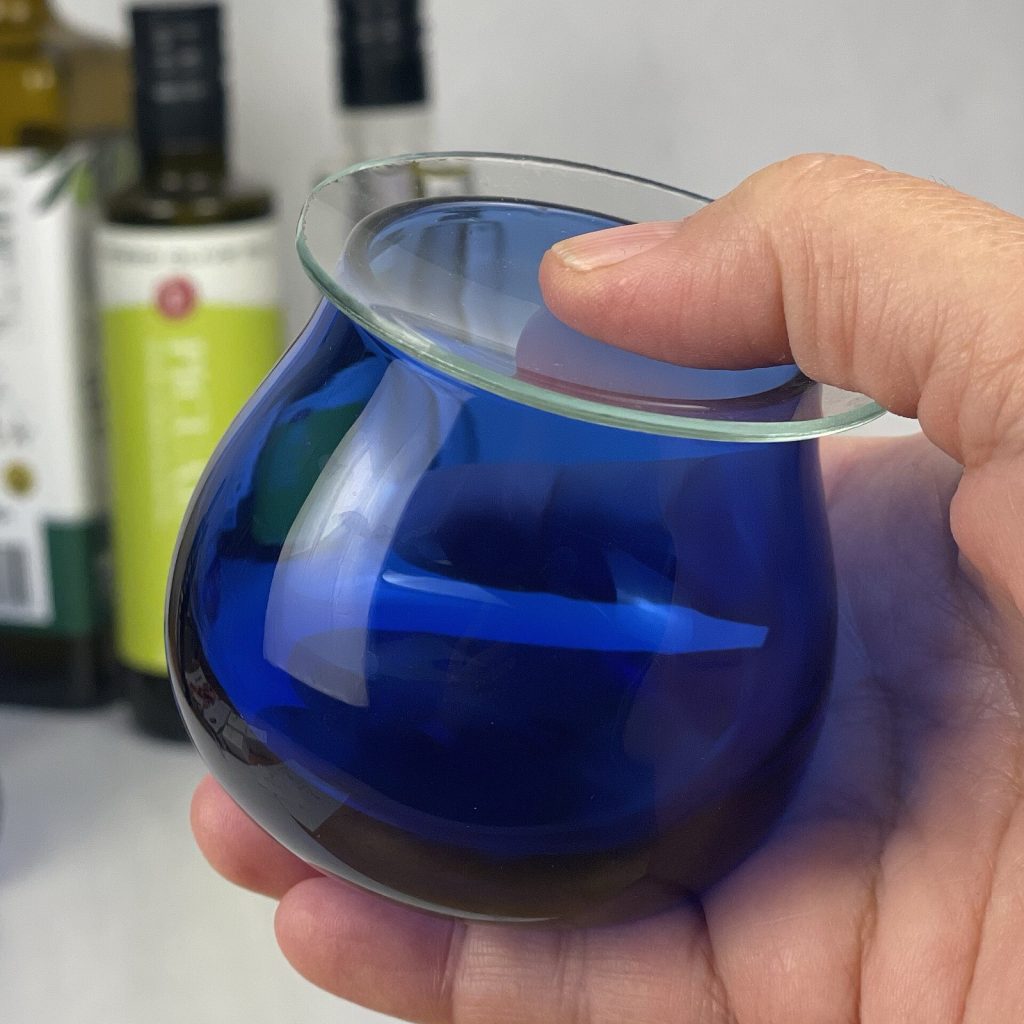
Entries are not thrown into one pot. Each oil is placed in a category according to the median intensity of its fruitiness as measured by the recognized panel that issued its sensory certificate: intense green, medium green or ripe. Oils are then assessed by several council-recognized panels, and the six highest scoring in each category become finalists.
The finalists go to an international jury, which scores them out of 100 for their aromas, their taste, the sensations at the back of the nose, and for harmony, complexity and persistence. That last group of criteria is what separates this competition from a simple defect check: an oil can be faultless and still be dull.
What the prize is worth
- It is the olive world’s own award, run by the intergovernmental body that writes the trade standard, so it carries weight with buyers who know the sector.
- Winners may put the award on the label, with an official logo, but only on bottles from the same batch as the winning sample.
- The entry list says something too. Portugal, a country most shoppers never think of, sent nearly as many oils as Spain and took a prize.
Read the small print on that logo: the prize belongs to a batch, not to a brand or an estate. The sample that won was a few bottles from one tank, in one harvest. Next year’s oil from the same producer may be excellent, but it has won nothing, and an award graphic that stays on the label year after year is a design decision, not a result. Look for the harvest year beside the medal, and if it is missing, assume the oil is older than the award.
Sources
- International Olive Council: Ceremony held to give prizes for IOC Mario Solinas Quality Award 2013 (June 26, 2013)
- International Olive Council: Prize winners and finalists, Mario Solinas Quality Award 2013 (April 15, 2013, archived)
- International Olive Council: Press release, IOC Mario Solinas Quality Award 2013 (April 12, 2013)