Carbs in Olives: About 1 to 2 g per Serving, Mostly Fibre
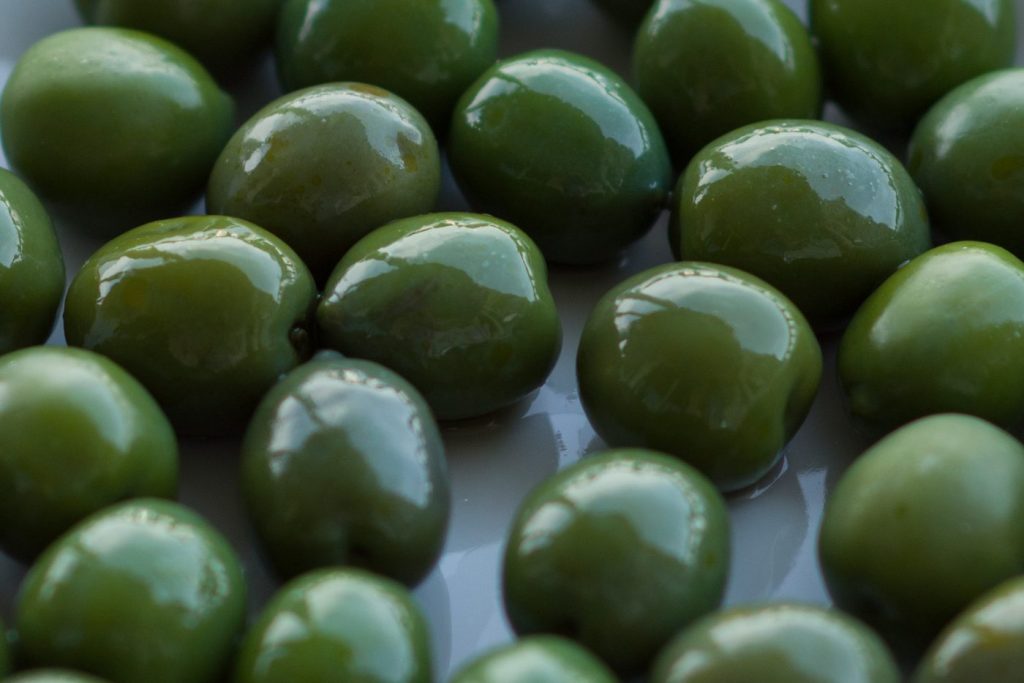
Yes, olives do contain carbohydrates, but only a very small amount, and most of it is fibre rather than sugar. A typical serving of five to ten olives carries roughly 1 to 2 grams of total carbohydrate, and because a good chunk of that is dietary fibre, the net carbs land closer to 0.5 to 1 gram. In plain terms: olives are one of the lowest-carb whole foods you can put on a plate, which is exactly why they turn up so often on keto, low-carb and Mediterranean menus alike.
How many carbs are actually in olives?
The honest answer is that it depends a little on the type and how they’re cured, but not by much. Olives are a fruit, and like most fruits they hold some natural sugars while still on the tree. The twist is that olives are far too bitter to eat raw, so they’re cured in brine, lye or salt before they reach you, and that curing process leaches out much of what little sugar was there to begin with. What’s left is a fruit that is mostly water, fat and fibre, with carbohydrate trailing well behind.
Here’s roughly how the numbers shake out. Treat these as widely-accepted approximate ranges rather than exact figures, because brand, size and curing method all nudge them around.
| Olive (per ~28g / 1 oz, roughly 6–8 olives) | Total carbs | Fibre | Net carbs | Sugars |
|---|---|---|---|---|
| Black (ripe, brine-cured) | ~1.5 g | ~0.9 g | ~0.6 g | ~0 g |
| Green (brine-cured) | ~1 g | ~0.8 g | ~0.2 g | ~0 g |
| Kalamata (brine-cured) | ~1.5 g | ~1 g | ~0.5 g | ~0 g |
| Dry salt-cured (wrinkled black) | ~2 g | ~1 g | ~1 g | trace |
A couple of things jump out. First, sugars are essentially nil across the board, which is unusual for a fruit and a direct result of curing. Second, fibre makes up a large share of the total carbohydrate, so once you subtract it the net-carb figure is genuinely tiny. On a per-olive basis you’re looking at something like a tenth of a gram of net carbs each, which is why a scattering of olives barely registers on a low-carb tally.
Why olives are so low in carbs (and where the calories come from)
If the carbs are negligible, where do an olive’s roughly 5 to 6 calories per fruit come from? Fat, mostly, and the good kind. Olives are around 10 to 15 per cent fat by weight, dominated by monounsaturated fatty acids, the same heart-friendly fat that makes olive oil the backbone of the Mediterranean table. That fat is why olives feel satisfying out of all proportion to their size, and why they pair so well with the bread, cheese and wine of a proper mezze spread.
Protein is present only in trace amounts. So the macro story of an olive is simple: a whisper of carbohydrate, a modest hit of healthy fat, and a lot of water and salt. That salt is worth a word of its own. The brine olives sit in is where most of their sodium comes from, and while sodium isn’t a carbohydrate, it’s the number most people should actually keep an eye on if they’re eating olives by the handful. If you’re watching your salt intake, a quick rinse under the tap knocks a fair bit of it off without touching the carb count.
One practical note for the label-readers: stuffed and flavoured olives can carry more carbs than plain ones. Olives stuffed with pimento add very little, but those stuffed with things like garlic paste, sun-dried tomato or, occasionally, sweeter fillings can push the number up. Likewise, some tinned “black ripe” olives are treated with additives during processing. None of this turns olives into a high-carb food, but if you’re counting closely it’s worth a glance at the nutrition panel rather than assuming. For more on how different curing styles change what ends up in the jar, see our guide to curing olives, and our olive encyclopedia for a run-through of the main varieties.
A last point on provenance, since people often assume a name tells you a whole story. Variety names such as Kalamata or Manzanilla describe a cultivar and a curing tradition, not a strict single country of origin, and the same variety may be grown in several countries around the Mediterranean and beyond. It makes little difference to the carb count, but it’s worth keeping straight.
Do olives have carbs? Common questions
Are olives keto-friendly?
Very much so. With roughly 0.5 to 1 gram of net carbs per small serving and a healthy dose of monounsaturated fat, olives are close to an ideal keto snack. Just keep an eye on portion sizes if you’re eating a large amount, and watch the sodium rather than the carbs.
Which has fewer carbs, green or black olives?
They’re close enough that it rarely matters. Green olives tend to sit at the slightly lower end, while ripe black and dry-cured olives can be marginally higher, but all of them are low-carb. Choose by flavour, not by carb count.
Do olives raise blood sugar?
Not meaningfully. Because their sugar content is close to zero and they come packaged with fat and fibre, olives have very little impact on blood glucose. That said, if you manage diabetes this isn’t medical advice, and it’s always sensible to check with your own healthcare professional about your overall diet.
How many olives can I eat on a low-carb diet?
Plenty. Even a generous 20-olive portion is only around 2 to 3 grams of net carbs. The likelier limiting factor is salt, so let your sodium tolerance, not the carbohydrate, set the ceiling.