Fruit Fly Threatens California State’s Olives
One insect eats olives and nothing else. It arrived in California in 1998 and rewrote the state’s olive calendar. Understanding its life cycle explains most of what growers do all year — and a good deal of what you taste.
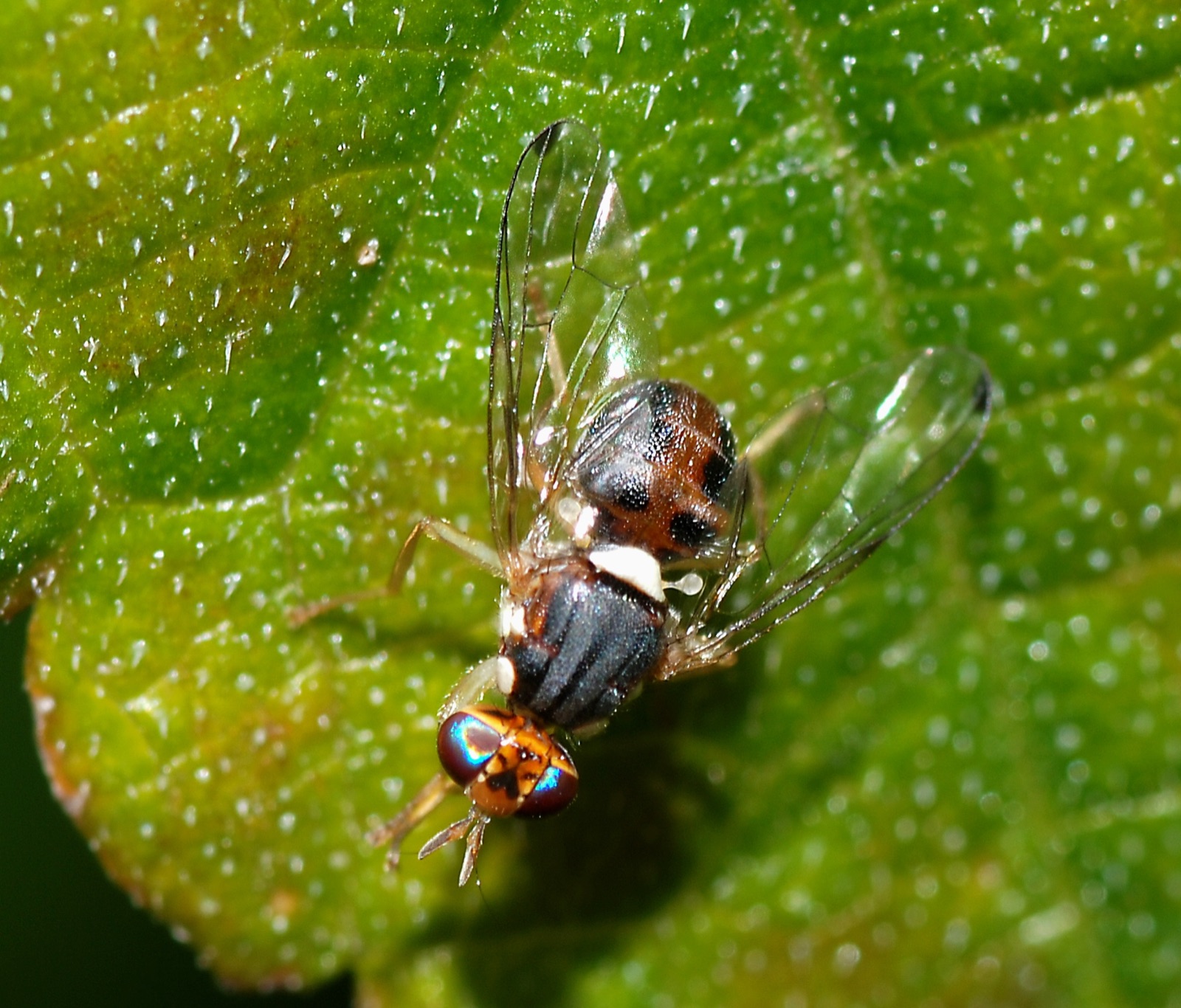
Most agricultural pests are generalists. The olive fruit fly is not. Bactrocera oleae develops in the fruit of olive and its close wild relatives and essentially nothing else, which makes it one of the most specialised serious pests in agriculture. It evolved with the olive around the Mediterranean basin, and wherever the olive has been carried, sooner or later the fly has followed.
It reached California in October 1998, found in a trap in the Los Angeles area, and spread through the state within a few years. For an industry that had grown up largely without it, this was not a nuisance. It was a permanent change to how olives had to be farmed.
| Species | Bactrocera oleae, a tephritid fruit fly |
|---|---|
| Host range | Olive and closely related species — effectively nothing else |
| Egg laying | The female pierces the skin and lays a single egg beneath it, leaving a small sting mark |
| Larval stage | The maggot mines the flesh of the fruit, tunnelling towards the pit |
| Generations | Commonly two to five a year, more in warm humid conditions, fewer in hot dry ones |
| Overwintering | Chiefly as pupae in the soil, with adults surviving in mild areas |
| Effect on table olives | Ruinous — visible stings and tunnels make fruit unsellable |
| Effect on oil | Raises free acidity, promotes fermentation and introduces sensory defects; heavy infestation can push oil out of the extra virgin grade |
What the maggot actually does to your oil
This is the part that surprises people who assume an insect problem is only cosmetic. The female stings the fruit and lays an egg beneath the skin; the larva then tunnels through the flesh. Three things follow. The wound opens the fruit to bacteria and fungi. The damaged tissue triggers enzymatic breakdown of the oil into free fatty acids, which is exactly what free acidity measures. And the resulting microbial activity generates the volatile compounds a sensory panel recognises as fusty, muddy or winey defects.
So a fly-heavy year does not simply mean less fruit. It means fruit that produces oil with higher acidity and detectable defects — oil that may fail the extra virgin grade entirely, no matter how carefully it is milled. For table olives the situation is simpler and worse: a stung olive is unsellable, and tolerance is effectively zero.
| Control | How it works | Honest limits |
|---|---|---|
| Monitoring traps | Yellow sticky panels and baited traps track adult numbers and time the response | Tells you when to act; controls nothing by itself |
| Spinosad bait sprays | A sweet bait laced with a low dose of insecticide, applied in spots; adults feed and die | Needs repeat application, washes off in rain, requires diligence |
| Mass trapping | Large numbers of attractant traps to reduce the adult population | Works best over a whole area, not one grove in isolation |
| Kaolin clay | A fine mineral film that makes the fruit unattractive for egg laying | Must be reapplied; leaves visible residue on the fruit |
| Sanitation | Removing fallen and leftover fruit that would carry the population over | Labour intensive and useless if neighbours do not do it |
| Early harvest | Picking before infestation builds up in autumn | Costs oil yield; a real trade-off, not a free win |
| Biological control | Introduced and native parasitoid wasps attacking the larvae | Helpful at landscape scale, not a standalone solution |
Why California was hit so hard: the reservoir problem
Here is the non-obvious factor, and it is the one growers mention with real feeling. California has an enormous population of olive trees that nobody farms — street trees, ornamentals in gardens and parks, decorative plantings around car parks and civic buildings, and abandoned old orchards. Every one of those is a breeding site, unmonitored, unsprayed and unharvested, producing flies that disperse into commercial groves year after year.
This is why olive fruit fly management is fundamentally an area-wide problem rather than a farm-level one. A meticulous grower surrounded by unmanaged trees is fighting a reinfestation they cannot win alone. It is also why the pest hits organic growers hardest: with a narrower toolbox, area-wide pressure is much harder to absorb, and it is one of the genuine reasons organic olives cost more.
What a buyer can read from all this
- Early-harvest oils dodge the worst of it. Picking before the autumn build-up is both a quality choice and a pest strategy.
- Very low free acidity figures on a spec sheet indicate fruit that was clean and promptly milled.
- Table olives with sting marks or soft tunnelled flesh should never reach you; if they do, change supplier.
- Fusty or winey flavours in an oil often trace back to damaged fruit, not just to slow milling.
- If you own a few olive trees, pick or clear the fruit rather than leaving it. You are part of your region’s fly population.
- Expect organic olives from fly-heavy regions to cost more. That premium is real work, not marketing.
The olive fruit fly: common questions
What is the olive fruit fly?
Bactrocera oleae, a fruit fly whose larvae develop almost exclusively in olives. The female lays a single egg under the skin of the fruit and the maggot tunnels through the flesh.
When did it reach California?
It was first found in the Los Angeles area in October 1998 and spread through the state’s olive-growing regions over the following years.
How many generations does it have?
Commonly two to five a year, with more in warmer, more humid conditions and fewer where summers are very hot and dry.
Does infestation affect olive oil quality?
Yes. Larval damage raises free acidity and allows microbial activity that produces fusty, muddy and winey sensory defects, which can push an oil out of the extra virgin grade.
Why are abandoned and ornamental olive trees a problem?
Because unharvested fruit lets the fly breed unchecked, creating a reservoir that continually reinfests commercial groves nearby. Control is only really effective when it is applied across a whole area.
Growers are often blamed for spraying and rarely credited for the alternative, which is picking early. Every week a grower waits, the fruit gains oil — and the fly gains ground. Harvesting in October instead of late November costs real yield and real money, and it is the single most effective thing a careful producer can do about the pest without reaching for anything. So when you taste a bright, green, early-harvest oil and pay a bit more for it, part of what you are paying for is a grower who chose a smaller crop over a compromised one. That is worth knowing.
Drawn from published integrated pest management guidance on Bactrocera oleae, including its California invasion history, life cycle, damage mechanism and control options.