Tunisia: Olive Country in Profile
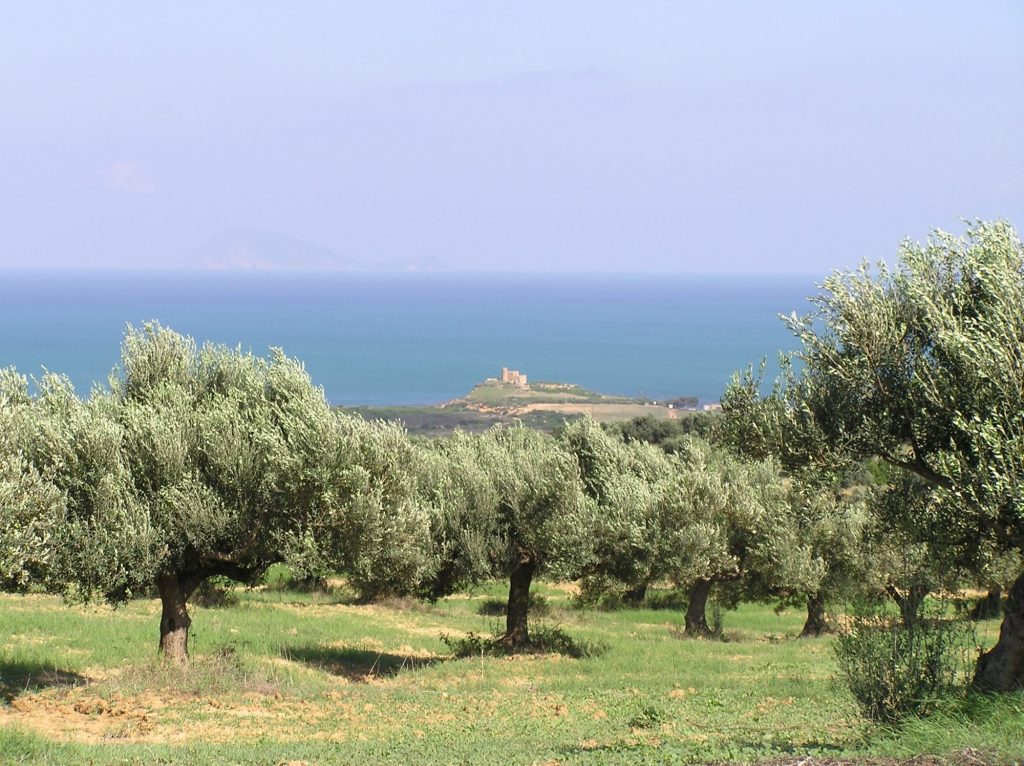
Few countries are as bound to the olive as Tunisia. The tree shapes its landscape, feeds its economy and reaches back to antiquity. To understand Tunisian oil you have to understand the country — the dry plains, the deep history, and a place among the world’s great producers.
To understand Tunisian oil you have to start with the land, because here the olive is not one crop among many — it is the crop, the thing the landscape was organised around. Drive the central Sahel and you see it: trees spaced far apart in vast open grids, each given room to claim what little rain falls. That single adaptation explains the country’s scale, its style and its quiet place near the top of the world’s exporters. Tunisia is dryland olive farming raised to a national art.
A land shaped by the tree
Tunisia holds tens of millions of olive trees spread across a vast, semi-arid interior, especially the central Sahel around Sfax. Because rainfall is scarce, growers plant the trees far apart in wide grids so each can claim enough soil moisture, giving the country its distinctive open groves that run to the horizon. The dominant variety is Chemlali, hardy and productive, with Chetoui more common in the wetter north.
This is dryland farming on an enormous scale, and it makes Tunisia consistently one of the largest olive-oil producers and exporters on earth, year after year. The spacing that looks so sparse to a visitor is not neglect — it is the precise answer to a hard climate, and it is why Tunisian groves cover so much ground for the oil they yield.
History, economy and a quiet name
The olive has grown here since Phoenician and Roman times, when North Africa was a granary and oil-bowl of the ancient Mediterranean; Roman presses still dot the landscape. Today olives remain a pillar of the rural economy and a major export earner, supporting a large share of the country’s farmers.
The frustration, as in much of the trade, is recognition. Much of the oil leaves in bulk to be blended and bottled abroad, so the world drinks Tunisian oil without knowing it — a story it shares with Türkiye and others. A growing number of estates now bottle at home, and single-origin Tunisian extra virgin is increasingly easy to find and well worth trying.
| Region | North Africa, Maghreb |
|---|---|
| Heartland | Central Sahel around Sfax |
| Main cultivars | Chemlali (centre/south), Chetoui (north) |
| Grove style | Widely spaced, rainfed, open grids |
| Harvest | November–January |
| The catch | Much leaves in bulk to be bottled abroad |
The angle: the world’s biggest anonymous oil
Here is the part the romance of Roman presses tends to bury. Tunisia is, in good years, one of the largest olive-oil exporters on earth — and most of that oil reaches consumers wearing another country’s label. It is shipped in bulk, blended into European bottles, and sold as something else. The fruit is genuine; the credit is borrowed. For a buyer, that single fact is both the warning and the opportunity.
- Why it’s invisible: bulk export, blended and bottled abroad.
- Why that matters: you may already drink Tunisian oil without knowing.
- Where the value is: estates now bottling single-origin at home.
- How to find it: a named estate, a variety, a harvest date.
- The payoff: the same fruit, minus the famous-postcode premium.
Tunisia’s olives: common questions
Is Tunisia really a major olive-oil producer?
Yes. In good years Tunisia is among the world’s largest producers and one of its biggest exporters of olive oil. Its low profile comes from selling much of that oil in bulk to be blended and bottled abroad, not from any lack of scale.
What is the Chemlali olive?
Chemlali is Tunisia’s dominant cultivar, hardy and productive, grown across the dry centre and south. It is the backbone of Tunisian production and tends to give a milder, softer, slightly sweet oil — the country’s everyday style.
Why are Tunisian groves so widely spaced?
Because rain is scarce. Spacing the trees far apart in open grids lets each one draw on enough soil moisture to survive and crop in a semi-arid climate. It looks sparse, but it is a precise adaptation to dryland conditions.
Why is so much Tunisian oil sold under other labels?
Because it has long been exported in bulk for blending and bottling in Europe, where it disappears into other brands. The fruit is Tunisian; the label is not. That is now changing as more producers bottle single-origin oil at home.
Is Tunisian olive oil good value?
Often, yes. Because the country is still under-celebrated, a named single-origin Tunisian extra virgin can offer genuinely good, fresh oil for less than a comparable Italian or Spanish name — provided you buy by estate, variety and harvest date.
Tunisian extra virgin is one of the better-value bottles on the shelf precisely because the country is still under-celebrated. Look for a named Tunisian estate, a harvest date and a Chemlali or Chetoui variety on the label. You often get genuinely good, fresh oil for less than a comparable Italian or Spanish name — the same fruit, minus the famous postcode premium. And here is the quiet irony worth remembering: thanks to bulk blending, you may well have been drinking Tunisian oil for years already, just under someone else’s flag. Buying it by name simply cuts out the middleman who took the credit.
Drawn from Tunisian agricultural data and Mediterranean olive-oil trade history.