Pollen Counts Turn Out to Predict the Olive Crop
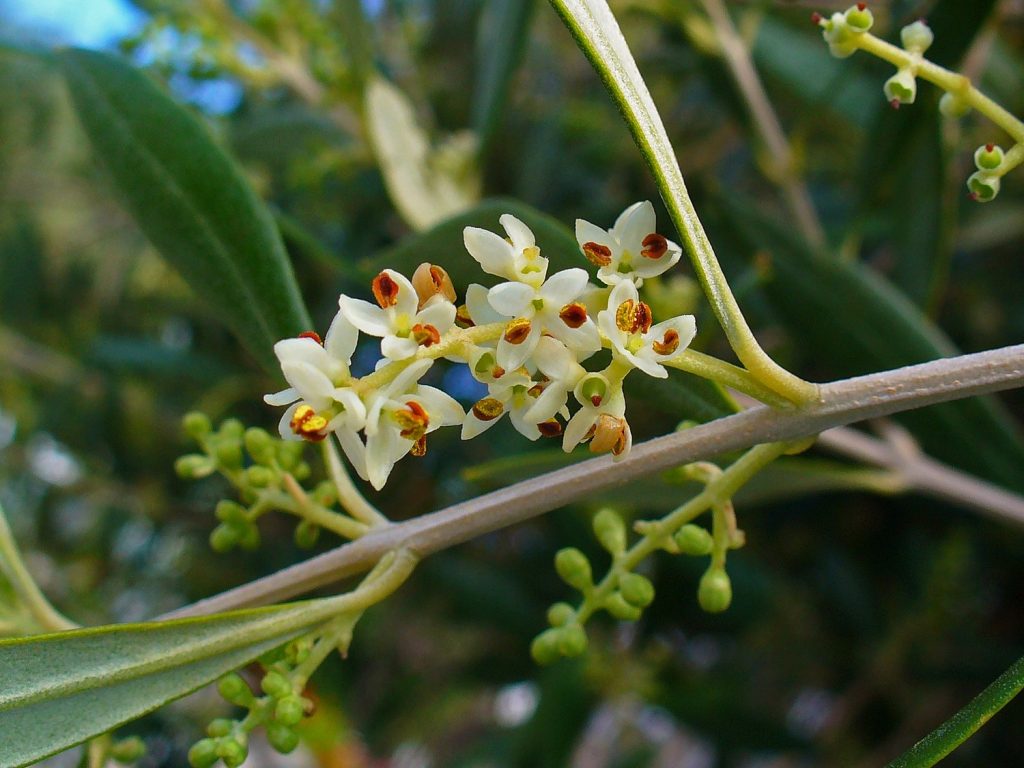
Spanish researchers say the single best early guide to how much olive oil a region will make is the amount of olive pollen in the air during flowering, followed by how hot March gets. A second Spanish laboratory reported this week on a compound in olive skins that kills colon cancer cells in a dish. One of these findings is useful now; the other needs reading carefully.
Counting pollen to count oil
The work comes from the University of Cordoba and the University of Castilla-La Mancha, and it was built on ten years of data from Castilla-La Mancha, the second largest olive oil producing region in Spain. The researchers matched airborne olive pollen, used as a measure of how hard the trees flowered, against weather records through flowering and fruiting, and then against what the region actually harvested.
Their conclusion is neat. The pollen index, the total pollen emitted across the whole season, was the variable that influenced the final crop most. The most important weather variable during flower development was the maximum temperature in March. Rain in October, when the fruit is filling out, also showed a positive effect on the final yield.
None of that will surprise a grower who has watched a hot spring burn off a flowering. What is new is that it can be measured from a pollen trap on a roof rather than guessed from a car window in May. Anyone planning labor, tanks and selling for a whole region has to commit money months before the fruit exists, and a forecast that is even roughly right is worth a great deal. The trees themselves swing hard from year to year regardless, which is why the grove year is planned around alternation rather than around hope.
The catch with pollen forecasts
A pollen index tells you about the flowering, and the flowering is only the first of several gates the crop has to pass. Between a heavy bloom and a full tank sit fruit set, summer drought, the olive fly, hail and the state of the grower’s bank balance. A forecast built on flowering will always be better at ruling out a big crop than at promising one.
- Good flowering plus a hot, dry spring can still end in a poor set.
- October rain helps the fruit fill, and arrives long after the pollen has been counted.
- Regional averages hide enormous differences between an irrigated grove and a dry hillside.
The other study, and how to read it
Researchers from the University of Granada and the University of Barcelona reported this week that maslinic acid, a triterpenoid found in the waxy skin of the olive and recovered from olive pomace, causes programmed cell death in human colon cancer cells grown in culture, through the mitochondrial pathway. They describe it as a possible route to a future therapy.
That is a real result and it is not a dietary result. The compound was applied to cells in a dish, at concentrations a person cannot reach by eating olives, and no one has shown that eating olives does anything of the kind in a human body. We went through the same exercise a few weeks ago with the polyphenol work on a breast cancer gene, and the lesson holds: a mechanism in a dish is a research lead, not a health claim. Eat olives because they are good; do not eat them as medicine. This is general information, not medical advice, and anything to do with cancer risk or treatment belongs with your doctor.
Crop forecasts leak long before they are published, and the people who trade oil act on them first. When a forecast for a short crop starts circulating, bulk buyers lock in supply and the price at origin moves weeks before any shopper notices. If you buy oil in quantity, the pollen and flowering reports out of Andalusia and Castilla-La Mancha in spring are a better early warning than any price list.