Spain’s Record Crop Sets an All-Time Sales Mark
There was a moment when Spain was riding its biggest-ever olive harvest: more than a million tonnes of oil pressed in a single quarter, and record sales to match. It is worth holding that number in your mind, because it is the before photograph — the high-water mark just before the lean years began.
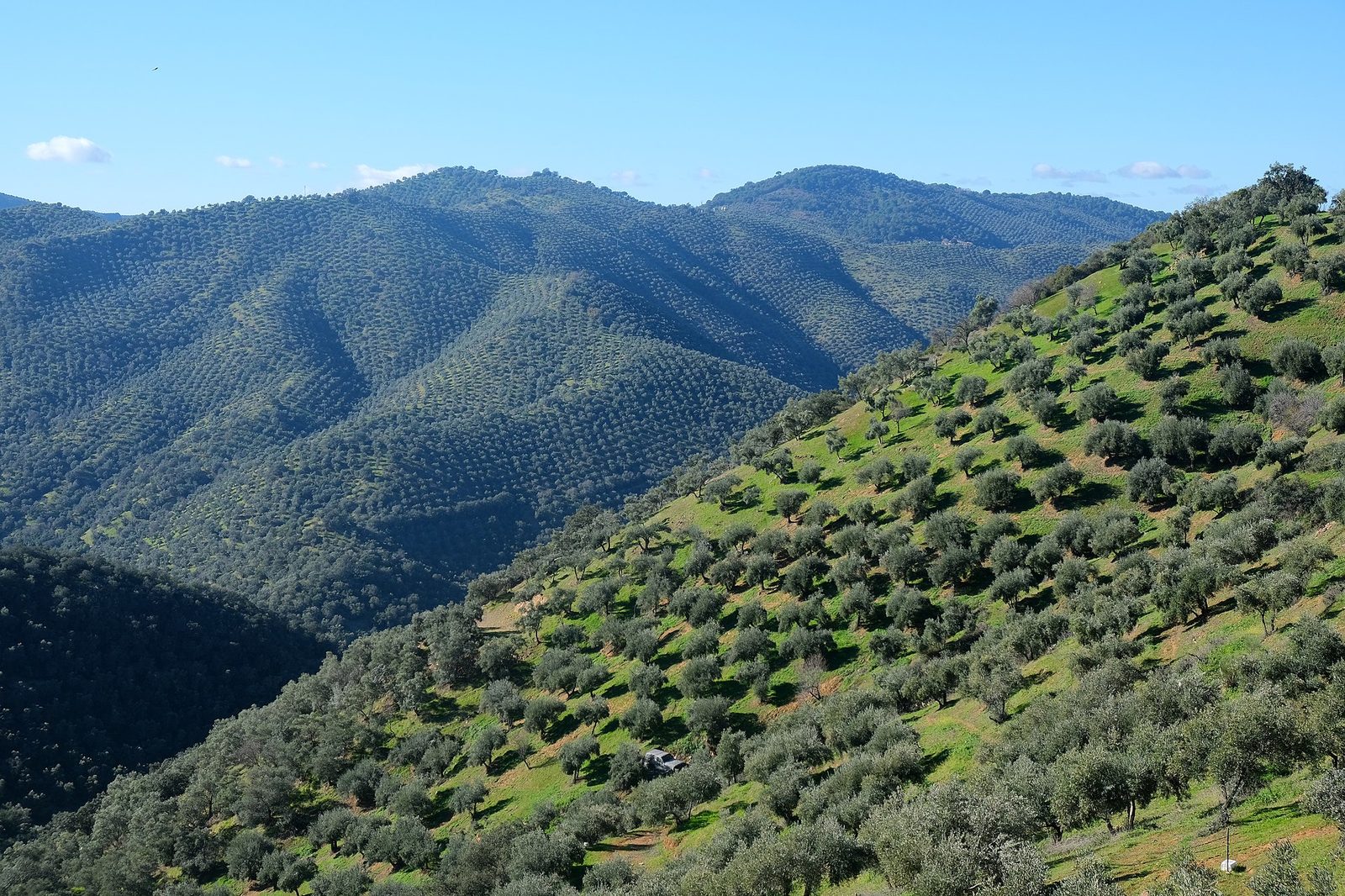
Spain is, by a wide margin, the largest olive-oil producer on earth — when Spain has a big year, the world has enough oil, and when Spain struggles, everyone pays. So a record Spanish harvest is not just a national story; it sets the tone for prices from Los Angeles to Tokyo. In one remarkable season Spain pressed well over a million tonnes of oil in a single quarter, milling a mountain of olives, and its food agency reported quarterly sales at an all-time high as record output met record demand. For a moment, abundance was the whole story.
Why Spain sets the world price
The scale is hard to overstate. Andalusia alone, and Jaen province above all, grows olives in numbers that dwarf whole countries elsewhere — a sea of trees engineered over generations to produce oil efficiently and in bulk. That concentration is what makes Spain the swing producer for the entire market. A single strong Spanish season refills the world’s tanks and keeps prices calm; a single weak one drains them and sends prices climbing everywhere. When you read the global oil price, you are, more than anything, reading the Andalusian weather.
The high-water mark
Hold that record quarter next to what came afterwards. Within a year the global crop would stumble badly; a decade on, drought-hit Spanish harvests would yield a fraction of this abundance, and prices would break every record in the other direction. That is why this figure is worth remembering — not as a triumph, but as a baseline. It is the clearest possible measure of how much the climate has since taken away, because you cannot feel a loss without knowing what was there before.
What it should teach a buyer
The lesson is not nostalgia; it is perspective. Cheap, plentiful olive oil was never a law of nature — it was the product of a run of good years in one extraordinary corner of Spain. When the weather in Andalusia turns, the whole world feels it on the shelf, because there is no second Spain to take up the slack. Understanding that is the key to reading every price spike calmly: the swing is not a conspiracy, it is the arithmetic of a market that leans heavily on a single region. The full breakdown of what sits inside the price is in the true cost of an olive.
| Producer rank | World’s largest by a wide margin |
|---|---|
| Record quarter | Over 1.24 million tonnes of oil |
| Heartland | Andalusia, above all Jaen province |
| Role in market | The swing producer for global prices |
| Why it matters now | A baseline for measuring later losses |
| The takeaway | Cheap oil depended on Andalusian weather |
Reading Spain’s harvest
- Watch Spain first — as the biggest producer, its crop moves the world price more than any other.
- Treat a record year as a baseline, not a promise; abundance is a run of luck, not a law.
- Remember there is no second Spain to cover a shortfall, so an Andalusian drought is felt everywhere.
- Read price spikes as arithmetic, not conspiracy — a concentrated market swings hard.
Spain’s record crop: common questions
How big was Spain’s record harvest?
Enormous — over 1.24 million tonnes of oil pressed in a single quarter, alongside record sales as output met strong demand.
Why does Spain matter so much?
It is by far the world’s largest olive-oil producer, so its harvest sets the tone for global supply and prices everywhere.
Where does most Spanish oil come from?
Andalusia, and above all the province of Jaen — the single densest olive-growing landscape on earth.
Why remember an old record year?
Because it is a baseline. It shows the abundance that later droughts erased, making the scale of recent losses visible.
Does a Spanish shortfall really reach my shelf?
Yes. There is no second Spain to make up the difference, so a poor Andalusian year pushes prices up worldwide.
I keep this number in my head as a photograph, not a boast. A record Spanish quarter, more than a million tonnes of oil, sales never seen before — that was the peak, and everything since has slid down from it. What people forget is that cheap, plentiful oil was never a birthright : it rested on a run of kind years in Andalusia, one astonishing corner of one country. There is no second Spain waiting in the wings. So when a drought hits Jaen and the price of your bottle jumps, it is not skulduggery — it is a market leaning its whole weight on a single landscape, and that landscape having a bad year.
Drawn from Spanish food-agency production and sales data for the record season.