How Italy Makes Its Oil
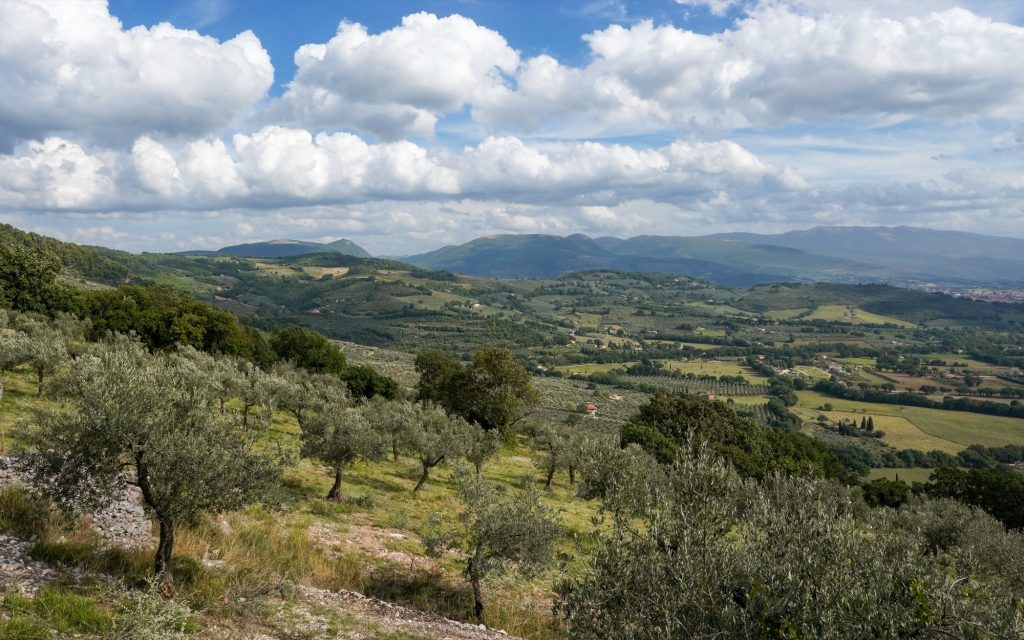
Italy is the most famous name in olive oil — and one of the most complicated producers. It is a land not of vast estates but of countless small growers, and that single fact shapes everything about how its oil is made, priced, and too often faked.
To understand Italian oil you have to give up the postcard. There is no single Italian method, because there is no single Italian farm. There are over a million growers, most of them tending a few old trees on terraces or in family plots, sending fruit to a local mill (a frantoio) that may serve a whole village. That fragmentation is the engine of everything good about Italian oil — the diversity, the regional character, the DOP identities — and the engine of everything dubious about it, including why so much oil is bottled in Italy without being grown there. Here is how the system actually works.
A country of small growers
Unlike Spain’s huge plantations, Italian olive growing is famously fragmented — millions of small plots, often old trees on terraces, many farmed part-time. Fruit goes to local frantoi, increasingly modern centrifuge plants. The strength is diversity and character; the weakness is cost and scale, which is part of why Italy imports oil to bottle and why “bottled in Italy” can mislead. A bottle that says Italy on the front may hold oil that arrived from Spain, Greece or Tunisia and was merely blended and packed on Italian soil.
| Structure | Over a million small growers, fragmented plots |
|---|---|
| Milling | Local frantoi, increasingly continuous centrifuge |
| Top cultivars | Coratina, Frantoio, Leccino, Moraiolo, Nocellara, Taggiasca |
| Quality marks | DOP / IGP tied to region and method |
| Trade reality | A large net importer; bottles and re-exports |
| Style range | From soft northern oils to fierce Puglian Coratina |
The shift to quality
Italy’s best producers have leaned into what fragmentation does well: early harvests, regional varieties and DOP/IGP oils with real identity. Where tradition once meant picking late for yield, the modern quality movement picks green and presses fast, chasing the peppery, polyphenol-rich style. The result is some of the world’s finest oils — a Tuscan Frantoio blend, a Puglian Coratina, a Sicilian Nocellara — alongside a great deal of anonymous blend that trades on the flag and little else. The gap in quality, and price, between those two Italies is enormous.
The “bottled in Italy” trap
This is the part of Italian production worth understanding before you spend a euro, because it is the single biggest way buyers get fooled. Italy consumes and exports more oil than it grows, so it imports heavily — lawful, ordinary trade. The problem is the label. “Bottled in Italy,” “packed in Italy,” even an Italian brand name and a picture of a Tuscan hill, can all sit on a bottle whose oil never grew in Italy at all. None of that is necessarily fraud; much of it is legal. But it trades on a flag to charge a premium for what may be ordinary blended oil. The fix is not to distrust Italy — it is to read past the marketing.
- “Bottled / packed in Italy” — tells you where it was put in glass, not where it grew.
- “Product of Italy” — stronger, but still not a guarantee of estate quality.
- A named DOP/IGP + estate + harvest date — this is the real Italy, and what you should pay up for.
| Named DOP / estate oil | “Bottled in Italy” blend | |
|---|---|---|
| Where grown | Stated region | Often unstated / imported |
| Harvest date | Usually on the label | Rarely |
| Character | Distinct, regional | Generic, smoothed |
| What you pay for | The grower and the place | The flag and the bottling line |
| Price | Higher, often justified | Cheapest, sometimes a trap |
How to read Italy honestly
The trick with Italy is to ignore the romance and read the specifics. The flag means little; the region and the variety mean everything. A Puglian Coratina is fierce and bitter; a Ligurian Taggiasca is soft and sweet; a Tuscan Frantoio blend sits peppery in the middle. None of that reaches you through a tricolore on the front of a supermarket bottle. It reaches you through a named DOP or IGP, an estate, a cultivar and a harvest date. Buy those, and you are buying the real Italy — the small grower and the honest mill — rather than the marketing of it.
How Italy makes its oil: common questions
Why does Italy import olive oil?
Because it consumes and exports more than it grows. Italian olive farming is fragmented and costly, so the country buys in oil from Spain, Greece, Tunisia and elsewhere to bottle and sell on. That is ordinary trade — the issue is only when the label implies the oil grew in Italy.
What does “bottled in Italy” really mean?
It means the oil was put into glass in Italy — not that it was grown there. The same goes for “packed in Italy” and Italian-sounding brand names. For Italian-grown oil, look for a named DOP or IGP, an estate and a harvest date instead.
What are the main Italian olive varieties?
Coratina (Puglia, fierce and bitter), Frantoio and Moraiolo and Leccino (the Tuscan and central classics), Nocellara (Sicily) and Taggiasca (Liguria, soft and sweet). The country’s range runs from gentle northern oils to some of the most pungent oils on earth.
Why is good Italian oil expensive?
Small plots, old terraced trees, part-time farming and early hand or light harvesting all raise costs, and the best oils carry DOP/IGP overheads too. You are paying for genuine regional character and traceability — not for the flag on a supermarket blend.
How do I avoid the marketing and buy real Italy?
Buy by region and variety, not by flag: a named DOP or IGP, a stated estate, a cultivar you recognise and a recent harvest date. That route reaches the small grower and the honest mill, which is the Italy worth paying for.
Buy Italy by the region and variety, not the flag: a named DOP, an estate, a harvest date. That is how you reach the real Italy — the small grower and the honest mill — rather than the marketing of it. The hard truth is that the tricolore on a cheap bottle is doing a job, and that job is to make you assume things the label never actually promises. “Bottled in Italy” is not “grown in Italy.” Once you stop paying for the flag and start paying for the grower, Italian oil goes from one of the most over-marketed categories on the shelf to one of the most rewarding.
Part of the olives101 country guides.