Sheet Pan Pizza With Olives: The Easiest Great Pizza a Home Oven Makes
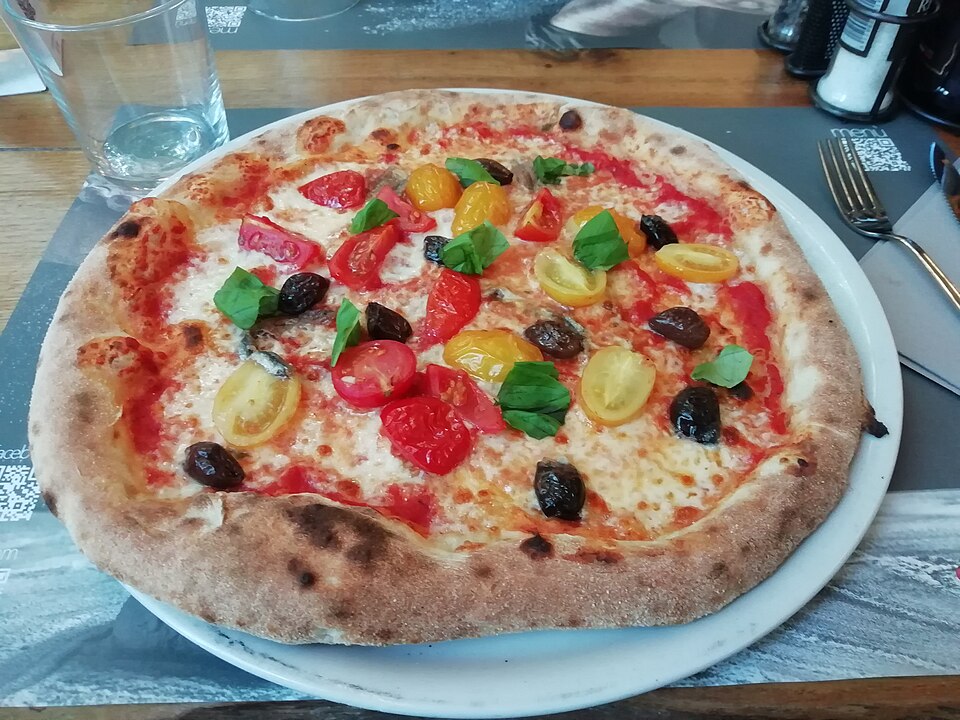
A sheet pan pizza is the one pizza a home oven makes genuinely well, because it stops fighting the oven and uses the tin and a pool of olive oil to do what a pizzeria’s heat would. The base half-fries in the oil into something crisp underneath and soft on top, the dough needs no stretching skill at all, and it feeds six. Olives suit it better than almost any other topping, because the long bake draws their brine out and concentrates them.
Why it works when a thin pizza does not
A domestic oven tops out around 250°C. A Neapolitan pizza wants 450°C and 90 seconds. Trying to make one at home produces a pale, bready compromise. A sheet pan pizza is built for the heat you actually have: a thick, heavily oiled dough in a metal tin, baked for 20 minutes rather than 2. The oil conducts heat into the underside of the dough, so the bottom browns and crisps while the thick top stays tender. It is closer to focaccia than to a thin crust, and it is meant to be.
The olives, and where to put them
| Olive | On a sheet pan pizza | When to add |
|---|---|---|
| Kalamata, halved | The best choice. Concentrates beautifully over a long bake | At the start, pressed into the dough |
| Green, halved | Holds its shape, gives a sharp salty contrast | At the start |
| Tinned black, sliced | Fine and familiar, milder than the others | At the start |
| Dry-cured black | Strong, can turn leathery over 20 minutes | Halfway through, and use fewer |
| Castelvetrano | Their sweetness is lost under cheese and a long bake | Scatter raw over the top after baking |
Press halved olives cut side down into the dough before it goes in, rather than scattering them on the cheese. Pressed in, they cook into the base and stay put when you cut it; scattered on top, they roll off and dry out. More on matching the olive to the pizza in the best olives for pizza.
What you need
For one standard 33 by 23cm sheet pan, feeding four to six.
- 500g strong bread flour
- 400ml lukewarm water
- 7g dried yeast
- 10g salt
- 6 tablespoons olive oil, divided
- 200ml passata or crushed tomatoes, seasoned
- 250g low-moisture mozzarella, grated
- 120g olives, halved
- Dried oregano, a few basil leaves to finish
Method
- Mix a wet dough. Stir flour, water, yeast and salt into a sticky shaggy mass. No kneading. This is a high-hydration dough and it is meant to be loose.
- Oil and rest. Pour 2 tablespoons of olive oil over it in the bowl, cover, and leave 2 hours at room temperature, or overnight in the fridge for better flavour.
- Oil the tin generously. Pour 3 tablespoons of olive oil into the sheet pan. This is not a mistake. The oil is what fries the base.
- Tip the dough in and let it relax 20 minutes, then press it towards the corners with oiled fingertips. It will spring back. Wait 10 minutes and press again rather than forcing it.
- Dimple and top. Press your fingers into the dough to make deep dimples, then press the halved olives in, cut side down. Spread the tomato thinly to the edges.
- Bake at 240°C on the lowest shelf for 12 minutes, until the base is set and starting to colour.
- Add the cheese, return for 8 to 10 minutes until it bubbles and the edges turn deep brown where they meet the tin. Those caramelised corners are the best part.
- Finish with oregano, basil and the last tablespoon of raw olive oil. Rest 5 minutes before cutting so the cheese sets.
The mistakes
- Too little oil in the tin. The base steams instead of frying and comes out soft and pale underneath.
- Cheese on from the start. It burns before the thick base is cooked. Add it at the halfway point.
- Forcing the dough into the corners. It tears. Let it rest and it relaxes on its own.
- Top shelf. The base needs heat from below. Lowest shelf, always.
For the oil-in-dough science behind all this, see olive oil in pizza dough, and for a no-tomato version on the same principle, white pizza with olives.
Frequently asked questions
What is a sheet pan pizza?
A thick, rectangular pizza baked in a well-oiled metal tray. The oil fries the underside crisp while the top stays soft, which suits a home oven far better than a thin pizza that needs pizzeria temperatures.
Why do you use so much oil in a sheet pan pizza?
The oil in the tin conducts heat into the base and effectively fries it, giving a crisp golden underside at 240°C. Too little and the base steams instead, coming out pale and soft.
When should you add olives to a sheet pan pizza?
Press most olives into the dough before baking so they cook in and stay put. Add strong dry-cured olives halfway through, and scatter delicate ones like Castelvetrano raw over the top after baking.
When do you add cheese to a sheet pan pizza?
Halfway through the bake, after about 12 minutes. The thick base needs longer than the cheese does, so adding it at the start means it burns before the dough is cooked.
Can you make sheet pan pizza dough the day before?
Yes, and it tastes better for it. After mixing, oil the dough, cover it and leave it in the fridge overnight. Bring it back to room temperature before tipping it into the tin.