The Mills That Drive to the Olives in California
North America has exactly two mobile olive mills, both of them in California, and after only a couple of harvests they already have more work than they can take. Olive 2 Bottle and Mill on Wheels drive a complete mill up to the grove, so the fruit goes from tree to paste in an hour instead of a day. Here is how the two operations work, and why the idea matters more than it sounds.
Two trailers, one problem
Every grower with a few acres faces the same arithmetic. A good mill may be fifty or a hundred miles away, the bins and the truck have to be rented, the fruit sits in the sun while it waits its turn, and the oil pays for all of it in flavor. Small growers either accept that or do not harvest at all.
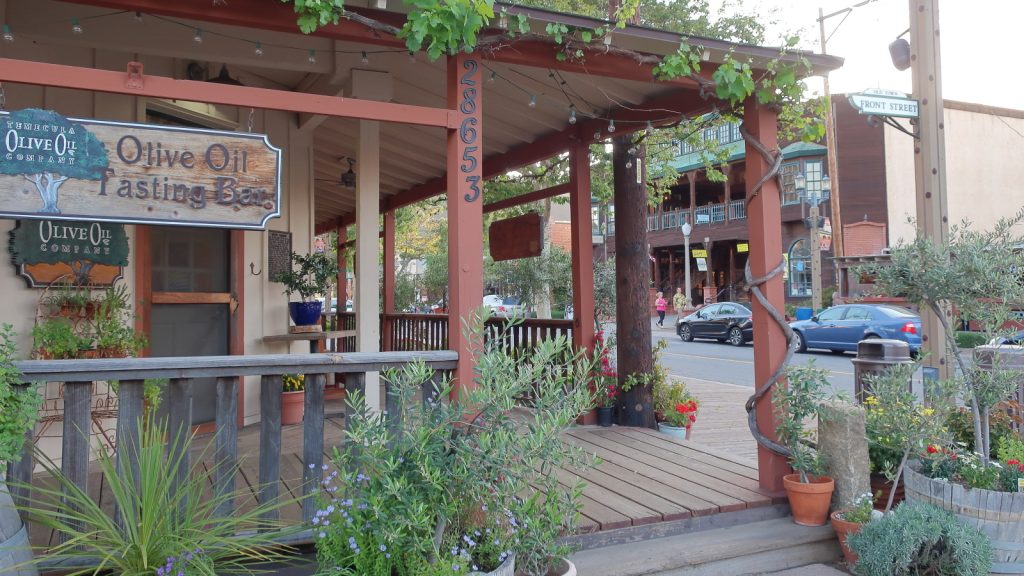
Olive 2 Bottle, known as O2B, is owned by the Temecula Olive Oil Company. Its general manager, Thom Curry, first saw the machine at UC Davis in 2009, when it was built more as a demonstration piece than a business, and bought it in September 2010, in time for its second harvest. O2B milled at 25 to 30 different places last season and expects 35 to 40 this year. The trailer can take three quarters of a ton of olives an hour, but Curry runs it at about half a ton, because slower means cooler and cleaner.
Mill on Wheels, or MOW, came out of a grower’s own frustration. Yves and Clotilde Julien of Olea Farms in Templeton had planted trees in San Luis Obispo and needed somewhere to mill them. The nearby Foxdale mill is good, Clotilde Julien says, but small. So they built a mill into a 36-foot trailer that processes two tons an hour. Their target for the first season was 100 tons. They milled more than 250, and think they could double that this year if the weather cooperates.
Why the hours matter
Olives start to deteriorate the moment they leave the tree. Bruised fruit ferments, piles heat up, and the defects that trained tasters call fusty and winey are simply the smell of fruit that waited too long. No amount of skill at the mill removes them afterwards.
That is the whole case for a mill on a trailer. As Curry puts it, the quality you can get even from mediocre olives is surprising if you mill them quickly. The same logic drives the big estates to build their own mills inside the grove. A mobile mill hands that advantage to a grower with four acres and no capital.
| Mill | Owner | Capacity |
|---|---|---|
| Olive 2 Bottle | Temecula Olive Oil Company | Up to three quarters of a ton an hour, run at about half a ton |
| Mill on Wheels | Yves and Clotilde Julien, Olea Farms | Two tons an hour, in a 36-foot trailer |
Where the trailers are going next
MOW has a customer in Georgia whose harvest should fall in the first weeks of September, and plans to ship the trailer east and be back for the California season, starting in San Diego and working up through Malibu, the Central Coast and Carmel. O2B has had enquiries from growers in Argentina and Australia. Neither operation is short of demand, which tells you how many small groves have been quietly underserved.
Both owners make award-winning oil of their own, and both say the same thing about custom milling: they run other people’s fruit to the same standard as their own, because their name travels with the trailer.
- A mobile mill does not fix bad fruit. It stops good fruit going bad on the road.
- Shared milling means shared equipment, so ask how the machine is cleaned between growers.
- Small lots milled fast are how most of the interesting California oils are now made.
California has been building milling capacity for years, from large permanent plants to grower cooperatives on the North Coast. If you want the basic sequence a mill goes through, we have set it out in how olive oil is made, from the tree to the bottle.
When a label says cold pressed, it tells you about temperature, not about time. The number that actually predicts how fresh an oil tastes is the gap between picking and milling, and almost nobody prints it. If you buy direct from a grower, ask how many hours the fruit waited. The good ones answer in hours, not in days.
Sources
- Olive Oil Times: Olive Oil Producers Go Mobile in California, 20 June 2011
- Temecula Olive Oil Company, which owns Olive 2 Bottle, on how oil is made and the twenty four hour rule (archived copy)
- Olive 2 Bottle and Mill on Wheels, company sites, 2011 (no archived copy of either will open now)