Turkish police seize 400 kilos of heroin
Every so often a customs seizure reveals contraband hidden in vats of olives. It is not a coincidence. Bulk olive cargo is heavy, opaque, strong-smelling, low in unit value and utterly routine — which is exactly what concealment requires.
The story is always reported as a crime story, and it is one. But for anyone who has worked in the olive trade it reads as something else: an accidental description of how olives actually move around the world. Not in the pretty jars you see on a shelf. In drums. Hundreds of kilos at a time, in brine, unlabelled except for a lot code, crossing borders on trucks, changing hands two or three times before anybody puts a brand on them.
Why bulk food cargo attracts concealment
Consider the problem from a smuggler’s point of view and the choice becomes obvious. Bulk olives are heavy, so weight anomalies are hard to spot. They are packed in opaque containers full of cloudy liquid, so visual inspection means opening and emptying. They smell strongly and persistently, which complicates detection work. They are low in value per kilo, so nobody guards them closely. They move constantly across the same routes in large volumes, so a consignment attracts no attention. And they are perishable enough that everybody in the chain wants them cleared quickly.
Land routes matter here too. The border crossings between Türkiye and the European Union carry enormous volumes of food freight, and any corridor that busy is a corridor worth exploiting. The same logistical efficiency that lets a Turkish or Tunisian cooperative deliver olives to a European repacker in a few days is the efficiency a smuggler is renting.
| Bulk format | Typical size | Why it appeals to concealment | What the trade does about it |
|---|---|---|---|
| Plastic brine drum | Around 200 litres | Opaque, sealed, liquid-filled, heavy, ubiquitous | Tamper-evident seals and numbered lot codes |
| Intermediate bulk container | Around 1,000 litres | Large volume, palletised, rarely opened in transit | Weight reconciliation and load photographs |
| Food-grade tanker | Several tonnes of oil | Single sealed compartment, no visual access | Sealed hatches, sampling at load and discharge |
| Pails and vacuum pouches | 5 to 20 kilos | Numerous units, tedious to inspect individually | Case counts, scanning, consolidated pallets |
| Retail pallets | Cases of jars or cans | Uniform, sealed, low-suspicion | Serialised cases and warehouse reconciliation |
What a seizure costs the honest exporter
The smuggler is a criminal problem. The consequences are a commercial problem, and they fall on people who did nothing. A suspect consignment is opened, which for olives in brine can mean the load is effectively finished: broken seals, contaminated brine, an interrupted cold chain and a product that can no longer be sold as it was declared. The exporter faces delay, disposal costs, an insurance argument and — worst of all — a customs record that flags every subsequent shipment for inspection. In a trade with thin margins and perishable cargo, being on a watch list is close to a commercial death sentence.
That is why the serious end of the bulk trade has spent years professionalising: numbered tamper-evident seals recorded at loading, photographs of the sealed load, weight reconciliation at every transfer, trusted-trader status with customs authorities, and traceability that ties every drum to a grove, a mill and a date. None of this is glamorous. All of it exists because the alternative is having your container opened at a border twice a year.
The bit that should interest you as a shopper
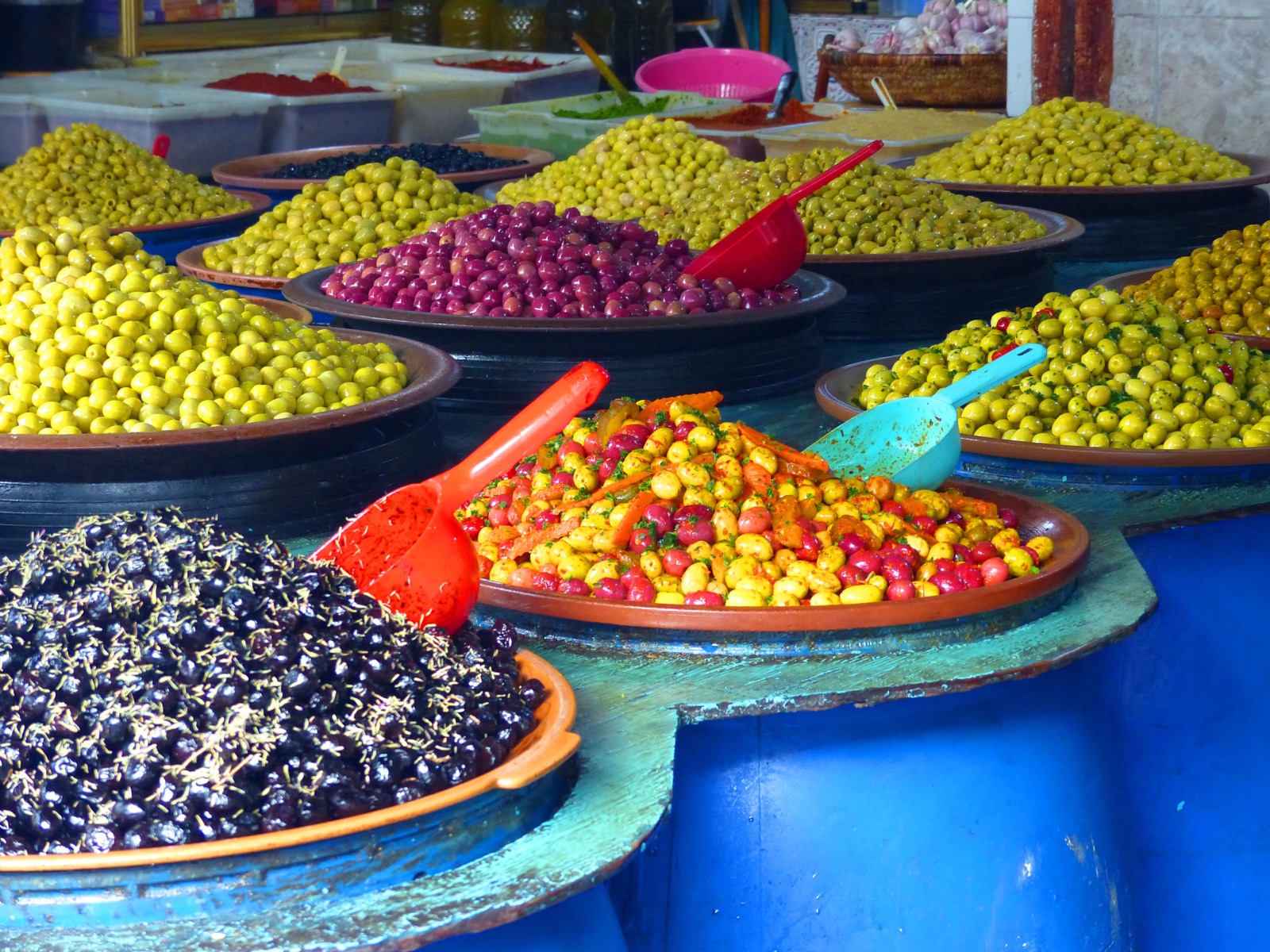
Strip away the crime and one durable fact remains: the great majority of table olives reach you through a bulk stage. They are cured in the producing country, shipped in drums, and repacked much closer to the consumer — into jars, into tubs, into vacuum pouches, and into the beautiful open bowls of a delicatessen olive bar.
Which brings us to the least popular thing you can say in a nice food shop. The olive bar is very often the same product as the jar three metres away, decanted from the same kind of drum, dressed with a little oil, some herbs and a chalkboard sign. Sometimes it genuinely is better — a good buyer choosing good lots, turning them over quickly, dressing them well. Sometimes it is identical stock with a marketing story and a higher price per kilo. The bar tells you how it was displayed. It tells you nothing about how it was made. See the true cost of an olive.
Practical takeaways
- Assume a bulk stage. Almost all table olives travel in drums before they meet a jar or a bowl.
- Ask the deli who packs their olives and how often the tray is refreshed. Good shops answer without hesitating.
- Judge the olive, not the display. Firm flesh, clean brine, no mushiness, no metallic or fermented off-notes.
- Bulk is not a quality grade. Excellent and mediocre olives both travel this way.
- For exporters, seals and traceability are cheap insurance against a problem that is not yours but will cost you.
- A supply chain nobody can describe to you is a supply chain nobody is checking.
How olives travel: common questions
How are table olives shipped internationally?
Mostly in bulk: cured in the producing country and shipped in brine, typically in drums of around 200 litres or in larger intermediate bulk containers, then repacked closer to the final market.
Why do smuggling cases keep involving food shipments?
Because bulk food cargo is heavy, opaque, strong-smelling, low in value per kilo and moves in constant high volumes on established routes, which makes an individual consignment unremarkable and hard to inspect quickly.
Does this mean the olives I buy are unsafe?
No. Seizures are precisely the system working. The relevant point for a shopper is not safety but structure: most olives pass through a bulk stage and are repacked, so the packer is often not the producer.
Are deli-counter olives better than jarred?
Not automatically. They frequently come from the same bulk drums. A good deli buys well and turns stock over quickly, which does make a difference, but the open bowl itself is presentation rather than provenance.
How can an exporter protect a shipment?
Numbered tamper-evident seals, photographs of the sealed load, weight reconciliation at each transfer, lot traceability back to mill and grove, and trusted-trader arrangements with customs authorities.
Here is the thing I wish more shoppers knew, and it has nothing to do with smuggling. Those drums are the real olive trade. The same buckets that cross borders on pallets get opened in a back room, tipped into a tray, dressed with oil and a sprig of something, and sold at a considerable premium as fresh and artisanal. I am not saying the olive bar is a fraud — a good buyer picking good lots is worth paying for. I am saying the bowl is a display case, not a workshop, and if the shop cannot tell you who cured those olives and when, you are paying for the chalkboard.
Drawn from standard practice in the bulk table-olive trade, published customs and supply-chain security guidance, and long observation of how cured olives reach retail.