Spain Closes 2008/09 With 208,000 Tonnes in the Tanks
Spain ended the 2008/09 olive oil season with about 207,800 tonnes of oil in store, 15 percent below the average of the previous four seasons, after selling 1,188,900 tonnes at home and abroad, according to the final report of the Olive Oil Agency. This note covers the balance sheet, why strong sales have not lifted the price growers are paid, and what it says about the season now starting.
What the figures show
The Agencia para el Aceite de Oliva, the Spanish ministry body that collects the sector’s numbers, has published its final report for the season that ended on October 31. Total commercial movement, the home market plus exports, came to 1,188,900 tonnes, about the same as the season before and 7 percent above the four-year average. Exports accounted for 647,800 tonnes, 3 percent down on the previous season but 14 percent above the four-year average, with September and October still provisional.
At home, apparent consumption was 541,000 tonnes, 2 percent up on the year before, with a slow recovery as the season went on. Production was 1,029,300 tonnes. Imports, squeezed by low domestic prices and plenty of Spanish oil, fell 28 percent to 42,000 tonnes.
| Spain, 2008/09 season (AAO) | Tonnes |
|---|---|
| Production | 1,029,300 |
| Total sales (home market plus exports) | 1,188,900 |
| Exports | 647,800 |
| Apparent home consumption | 541,000 |
| Imports | 42,000 (down 28 percent) |
| Stocks at October 31 | 207,800 (114,500 at mills, 93,300 at packers and others) |
Why good sales have not helped the grower
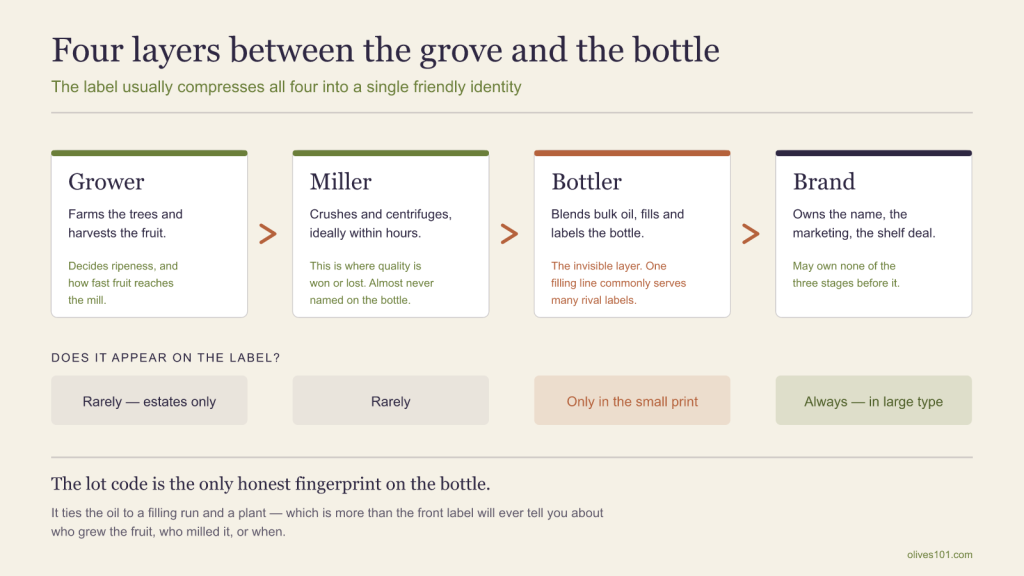
On paper this is a decent year: more oil moved than the country produced, stocks are down, and exports remain well above their medium-term average. Yet the price at origin has been sitting below the cost of production. Poolred, the price register run by the Fundación del Olivar, has had origin prices stuck around 2.10 euros a kilo all month, about 15.6 percent below the peak reached in the second week of September, and growers have spent the autumn organizing protests. The two things are not contradictory. Selling a lot of oil at a low price is exactly what a market does when supply is comfortable and the seller is in a hurry: Spain is now producing more than a million tonnes in an ordinary year, and much of it leaves in bulk, often to be bottled elsewhere under someone else’s brand.
That is the structural point behind the EU money for Spanish export promotion and behind the private storage aid opened in the spring. Selling more is not the same as selling better.
What it means for the season ahead
- Lower carry-over stocks are, on their own, a mildly bullish signal for prices.
- A big new Andalusian crop is coming in now, which points the other way.
- Bulk exports are what balanced the books; that trade sets the price, not the bottled market.
For readers wondering why a big harvest so often means a bad year for farmers, our older explainer on large crops and falling prices still applies.
Watch where the stock sits, not just how big it is. Of the 207,800 tonnes left at the end of October, 114,500 were still in the mills, which is to say in the hands of the people with the least staying power. Oil held by packers and traders can wait for a better price. Oil held by a cooperative that has to pay its members tends to get sold into whatever bid is on the table, which is how a year of good sales still ends in a bad price at the farm gate.