Rootstock and Scion: Building a Better Olive
An olive tree can be two plants in one. Graft a cutting of a prized fruiting variety — the scion — onto the established roots of a hardier plant — the rootstock — and you combine desirable fruit with tough, vigorous roots. It is an ancient trick, and it explains how growers get reliable, identical trees rather than gambling on seedlings.
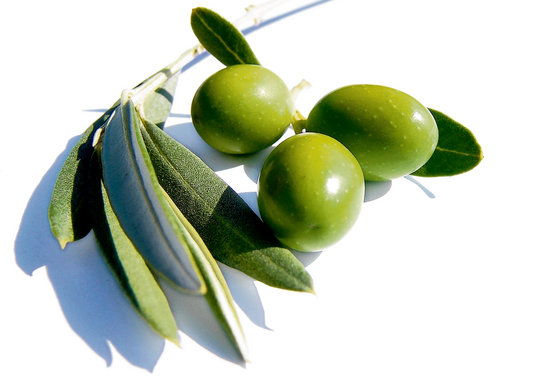
Olives grown from seed are a lottery. Like apples, the olive does not breed true — plant a stone from a Frantoio and you will not get Frantoio, but some unpredictable seedling that may bear poor fruit or take many years to crop. To get a known variety reliably, growers propagate it vegetatively, by cuttings or by grafting, so every tree is a genetic copy of the parent. Grafting takes a scion — a shoot of the chosen variety — and joins it to a rootstock, letting the new tree inherit exactly the fruit the grower wants while skipping the seedling lottery entirely.
Why not just grow from seed?
Because you would not get the tree you paid for. The olive’s genes reshuffle in every seed, so a stone is a genetic wildcard, not a copy. That is fine for a breeder hunting new varieties and useless for a grower who wants this year’s Frantoio to be next year’s Frantoio too. Cuttings and grafts sidestep the problem by cloning: the scion carries the parent’s exact genetics, so the fruit is predictable from the start rather than a decade-long gamble.
| Scion | A shoot of the chosen fruiting variety (the top) |
|---|---|
| Rootstock | The roots grafted onto (the bottom) |
| Graft union | Where scion meets stock; often a slight swelling |
| Why graft | Olives do not breed true from seed |
| Result | An exact clone of the chosen variety’s fruit |
| Rootstock brings | Vigour, soil/drought/disease tolerance, size, precocity |
| Top-grafting | Re-working an old tree to a new variety on its mature roots |
What the rootstock brings
The roots you graft onto are not neutral — they shape the whole tree. A vigorous or hardy rootstock can give better tolerance of difficult soil, drought or disease, and can influence the tree’s size and how quickly it comes into bearing. This is also how an old, established root system can be put to new use: a tree of an unwanted variety can be top-grafted, its branches replaced with scions of something better, so the grower keeps the mature roots while changing the fruit. It is, in effect, a way of building a tree to order — chosen fruit above, chosen roots below.
Spotting a grafted tree, and the sucker trap
Look low on the trunk for a graft union — a slight change in bark texture or a swelling where scion meets rootstock. Below it you will often see suckers shooting up from the roots. Here is the catch worth knowing: those suckers belong to the rootstock variety, not the grafted top. Growers rub them off so they do not steal the tree’s energy or, left to grow, quietly take it over — a tree that reverts to its rootstock is bearing the wrong fruit entirely.
Practical takeaways
- Olives do not breed true, so named varieties are cloned by cuttings or grafts, never grown from seed.
- The scion decides the fruit; the rootstock decides vigour, hardiness and size.
- Top-grafting lets a grower change a mature tree’s variety without losing its roots.
- Rub off root suckers — they are the rootstock variety and will take over if left.
- Look for the graft union low on the trunk to tell a grafted tree from a cutting.
Rootstock and scion: common questions
What is the difference between a scion and a rootstock?
The scion is the shoot of the chosen fruiting variety grafted on top; the rootstock is the roots it is joined to. The scion decides the fruit, the rootstock the roots.
Why not grow olives from seed?
Olives do not breed true — a seed gives an unpredictable seedling, not the parent. Grafting and cuttings clone a known variety exactly.
What does the rootstock contribute?
Vigour and tolerance of difficult soil, drought or disease, plus influence over the tree’s size and how quickly it comes into bearing.
What is top-grafting?
Re-working a mature tree to a new variety by replacing its branches with new scions, keeping the established roots while changing the fruit.
How can I spot a grafted tree?
Look low on the trunk for a graft union — a change in bark or a swelling. Suckers below it belong to the rootstock and should be rubbed off.
Look low on the trunk for a graft union — a slight change in bark texture or a swelling where scion meets rootstock. Below it you will often see suckers shooting up from the roots; these belong to the rootstock variety, not the grafted top, and growers rub them off so they do not steal the tree’s energy or, left to grow, quietly take it over. A neglected tree that reverts to its rootstock is bearing the wrong fruit entirely.
Drawn from olive propagation and nursery practice.