Health Benefits Key to Driving Olive Oil Sales Over $1 Billion by 2010
The American olive oil market was not built by cooks. It was built by health coverage, and by a regulatory system that permits a carefully hedged claim which almost no shopper reads as hedged at all.
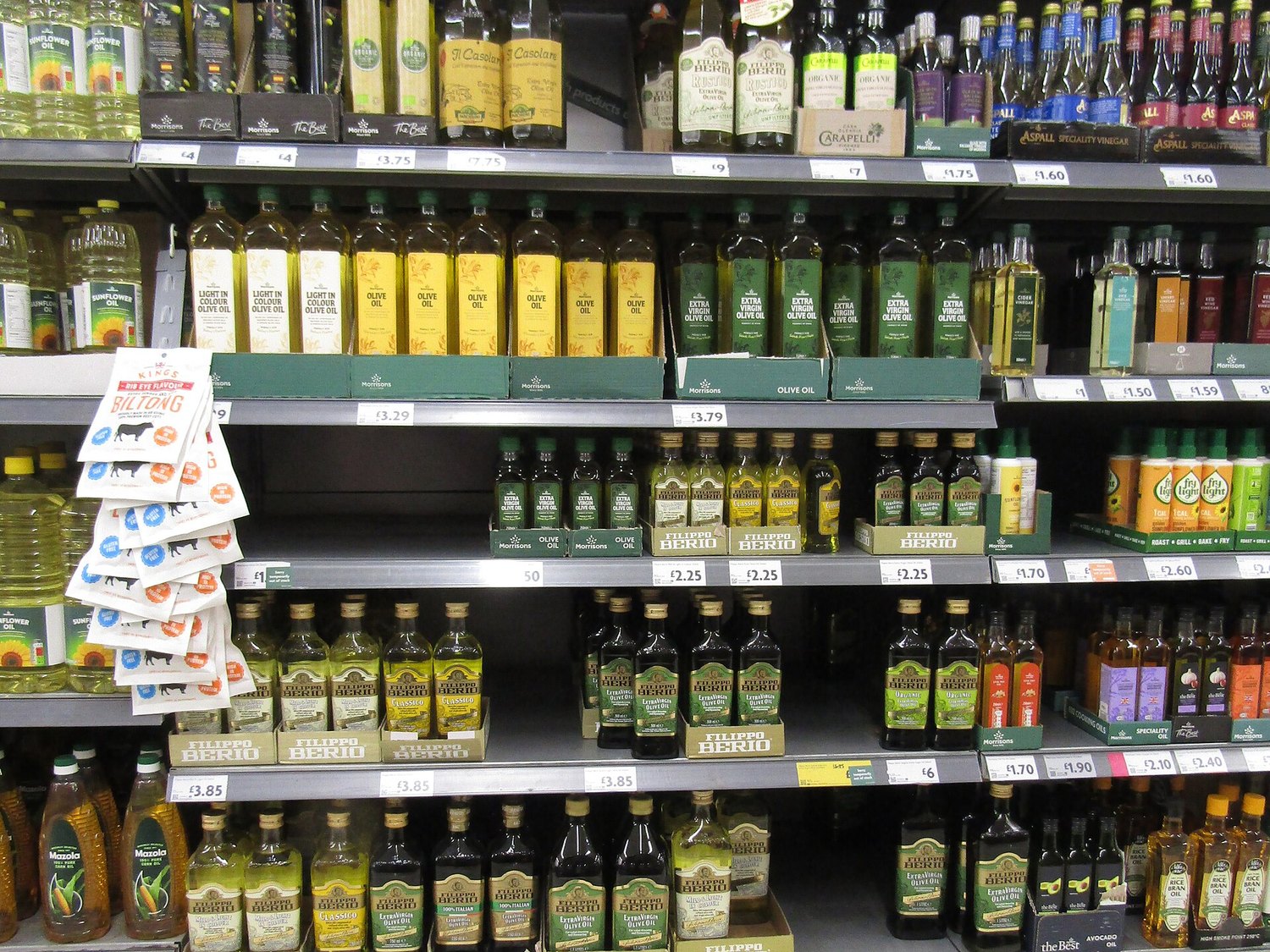
Look at how olive oil grew in markets with no Mediterranean tradition — the United States, Britain, northern Europe, and later much of Asia — and the pattern is consistent. Growth tracks health coverage far more closely than it tracks cooking. Tasting bars, single-estate oils and varietal labelling all arrived later, once the category was already established. The engine was the heart.
That is not a criticism of olive oil, which is a fine fat with real evidence behind parts of its reputation. It is an observation about how a food category gets built, and about the gap between what a producer is permitted to say and what a shopper hears. This is general information, not medical advice.
What may legally be claimed, and how carefully it is worded
Both major regulatory systems allow olive oil health claims, and both hedge them heavily. The hedging is the interesting part, because virtually none of it survives the journey to the front of a bottle.
| Jurisdiction | What is permitted | The conditions attached |
|---|---|---|
| United States | A qualified health claim linking the monounsaturated fat in olive oil to reduced coronary heart disease risk | Must state that the evidence is limited and not conclusive; tied to roughly two tablespoons a day, replacing similar amounts of saturated fat, without increasing total calories |
| European Union | That olive oil polyphenols contribute to the protection of blood lipids from oxidative stress | Only for oils containing at least 5 mg of hydroxytyrosol and derivatives per 20 g, with a stated daily intake of about 20 g |
| Both | Nothing about preventing, treating or curing disease | Disease claims are not permitted for foods in either system |
Read the US wording closely. It requires the acknowledgement that the evidence is limited and not conclusive. It specifies replacement of saturated fat, not addition. And it explicitly warns against increasing total calories. Three substantial caveats, all of them legally required, and all of them routinely reduced on packaging to a heart symbol.
The EU claim is narrower still, because it attaches to a measurable polyphenol content that most oil on sale does not reach and does not declare. Refining strips those compounds out, so a plain refined olive oil cannot honestly carry it at all.
What the halo does to shoppers
The most consistent effect of a health halo is not that people buy a better product. It is that they stop applying normal judgement to it. Three specific behaviours show up again and again.
They stop counting. Olive oil has the same energy density as every other fat — around 119 calories a tablespoon — and a heavy pour over a salad can add several hundred calories to a meal that felt virtuous. The halo makes the pouring hand generous.
They add rather than replace. Every serious claim in this area is a substitution claim: use this instead of that. Adding olive oil to an unchanged diet is a different intervention from the one that was studied, and it is not the one the evidence supports.
They stop checking the grade. The polyphenol argument applies to virgin grades. A great deal of oil bought for health reasons is refined blend, in which those compounds have largely been removed. The bottle rarely makes that easy to see.
| What drove category growth | Health coverage in general media, well ahead of culinary interest |
|---|---|
| What arrived later | Tasting bars, estate and varietal oils, harvest dating, regional labelling |
| US regulatory position | Qualified health claim, requiring an explicit statement that evidence is limited and not conclusive |
| EU regulatory position | Authorised claim tied to a minimum polyphenol content and a defined daily intake |
| Energy density | Identical to all other fats — roughly 119 kcal per tablespoon |
| Where the claims apply | Virgin grades for polyphenols; the fat-profile argument applies more broadly |
| Common misreading | Treating a substitution claim as a reason to add oil to an unchanged diet |
Buying sensibly inside a marketed category
- If health is your reason, buy a virgin grade and use it raw. Refining removes the compounds the EU claim rests on.
- Substitute, do not accumulate. Replace butter or a refined seed oil with it rather than adding it on top.
- Ignore heart symbols and wellness language on the front; read the origin, grade and date on the back.
- Treat light as a flavour description, never a calorie one. It is the same energy as any other olive oil.
- Be wary of any olive product promising a specific health outcome. Neither regulator permits disease claims, so a product making one is telling you something about itself.
This is general information, not medical advice.
Olive oil health marketing: common questions
Is olive oil allowed to make health claims?
Limited ones. The US permits a qualified claim about monounsaturated fat and coronary heart disease risk, which must state that the evidence is limited and not conclusive. The EU permits a claim about polyphenols protecting blood lipids, only above a defined polyphenol content.
How much olive oil do the claims refer to?
The US qualified claim refers to roughly two tablespoons a day replacing a similar amount of saturated fat; the EU polyphenol claim refers to about 20 g a day. Both are replacement, not addition. This is general information, not medical advice.
Does refined olive oil carry the same benefits?
For the monounsaturated fat profile, broadly yes. For the polyphenol claim, no — refining largely removes those compounds, so a plain refined blend cannot honestly carry it.
Is light olive oil lower in calories?
No. It refers to colour and flavour, not energy. All olive oil has essentially the same calorie content per tablespoon.
Why did the olive oil market grow so fast outside the Mediterranean?
Because health reporting drove it. Culinary interest — tasting, estate bottlings, varietal labelling — followed once the category was already established.
What strikes me, having watched this category grow from the inside, is how little of the marketing has to do with the actual product. A bottle can carry a heart symbol, a Mediterranean landscape and a wellness paragraph while declining to tell you the harvest date, the variety or whether it clears the polyphenol threshold its own health story depends on. Those are the three facts that would let you judge it, and they are the three most often missing. When the front of a bottle is doing more work than the back, that asymmetry is the message.
Claim wording and conditions follow the authorised US qualified health claim for olive oil and the EU authorised claim for olive oil polyphenols and its conditions of use.