China’s Olive Oil Market Booms, With an Adulteration Warning
China’s olive oil market is the fastest growing one Spanish exporters have, and a Spanish government report published this month warns that some of that growth is being fed by adulterated oil. The study, from Spain’s foreign trade institute ICEX, calls China the most promising market for Spanish exporters and, in the same breath, the one where cheap blends could spoil olive oil’s reputation before it is established. Here is what it found.
What the report says
The 58-page study, “The Olive Oil Market in China 2012”, was prepared under the Spanish embassy’s trade office in Shanghai. Olive oil still accounts for only about 1 percent of oil and fat sales in China, but it is the most dynamic part of the market: sales grew 21 percent last year to about 697.5 million yuan, roughly €84 million. China imported 32,886 tons of olive oil last year, up 55 percent on 2010, and 92 percent of it was virgin grade. Spain is the main supplier, followed by Italy, and the oil arrives in roughly equal parts in bulk and in bottles.
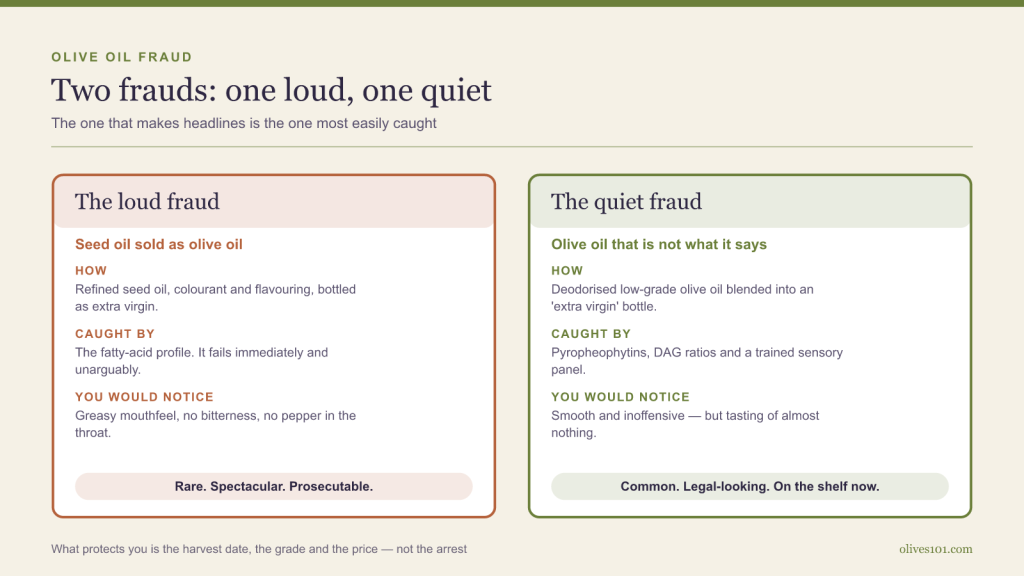
The warning is blunt. Some Chinese firms from outside the food business, the report says, import bulk oil and use gaps in China’s olive oil and labeling rules to mix it with other vegetable oils, cutting their costs and the quality with them. It suggests that a good deal of the recorded growth in imports may come from these importers, because import figures run well ahead of retail sales. That, it adds, risks overstocking, and oil kept badly and turned over slowly loses quality, which would damage olive oil’s prestige in China further.
| China and olive oil | Figure | Source |
|---|---|---|
| Share of oil and fat sales | About 1 percent | ICEX |
| Retail sales growth last year | 21 percent | ICEX |
| Imports, 2010/11 crop year | 33,227 tons, up 62 percent | IOC |
| Growth in imports since 2006/07 | 375 percent | IOC |
| Main suppliers, 2010/11 | Spain 55%, Italy 30%, Greece 6% | IOC |
Who is buying, and why
Chinese consumers buy olive oil mainly for health, the report says. In blind tastings they tend to prefer refined olive oil, finding virgin oil too strong for their cooking, yet they see virgin oil as the better product. Supermarkets sell about 75 percent of it, but the report sees more growth in gift packs, especially for Chinese New Year, in online sales and in the smaller second- and third-tier cities. The International Olive Council’s April newsletter tells the same story from the other end: marketers first got olive oil into China through corporate gift hampers, and retail sales followed as people began buying it for themselves.
China also wants to grow its own. According to the report, the current five-year plan provides for a five-fold expansion of plantations, with about 160,000 new hectares planned on the Himalayan slopes near Tibet, against no more than 40,000 hectares today, mostly in Sichuan, Gansu and Hubei.
What it means for buyers
- New markets are where the loopholes are. Where standards and checks are thin, blends labeled as olive oil find buyers who have nothing to compare them with.
- Price is the first test. Genuine virgin olive oil costs far more to make than seed oil. If a bottle sells for the price of seed oil, be suspicious.
- Look for the basics on the label. A named origin, a best-before date and, ideally, a harvest date are the minimum.
When import figures run far ahead of retail sales, the missing oil has gone somewhere. Sometimes it is simply in warehouses. Sometimes it has been stretched into something larger. Exporters know this and still ship, because a tank sold is a tank sold. The only real protection in a young market is a buyer who knows what the real thing tastes like.
This is not the first warning from China: see China: Warning issued over ‘bargain’ olive oil. How blending actually works is explained in Olive Oil Fraud: How the Adulteration Really Works, and China’s first try at growing olives is in China’s first olive harvest strikes oil.
Sources
- Olive Oil Times: Adulteration Risk as Olive Oil Gains Ground in China
- International Olive Council: Market Newsletter No 60, April 2012 (PDF)