The good oil on a top Australian’s crop
A thousand trees will not make anyone rich in Australia. The growers who last are the ones who sell direct, diversify hard, and treat a full dam at the end of summer as better news than a good price.
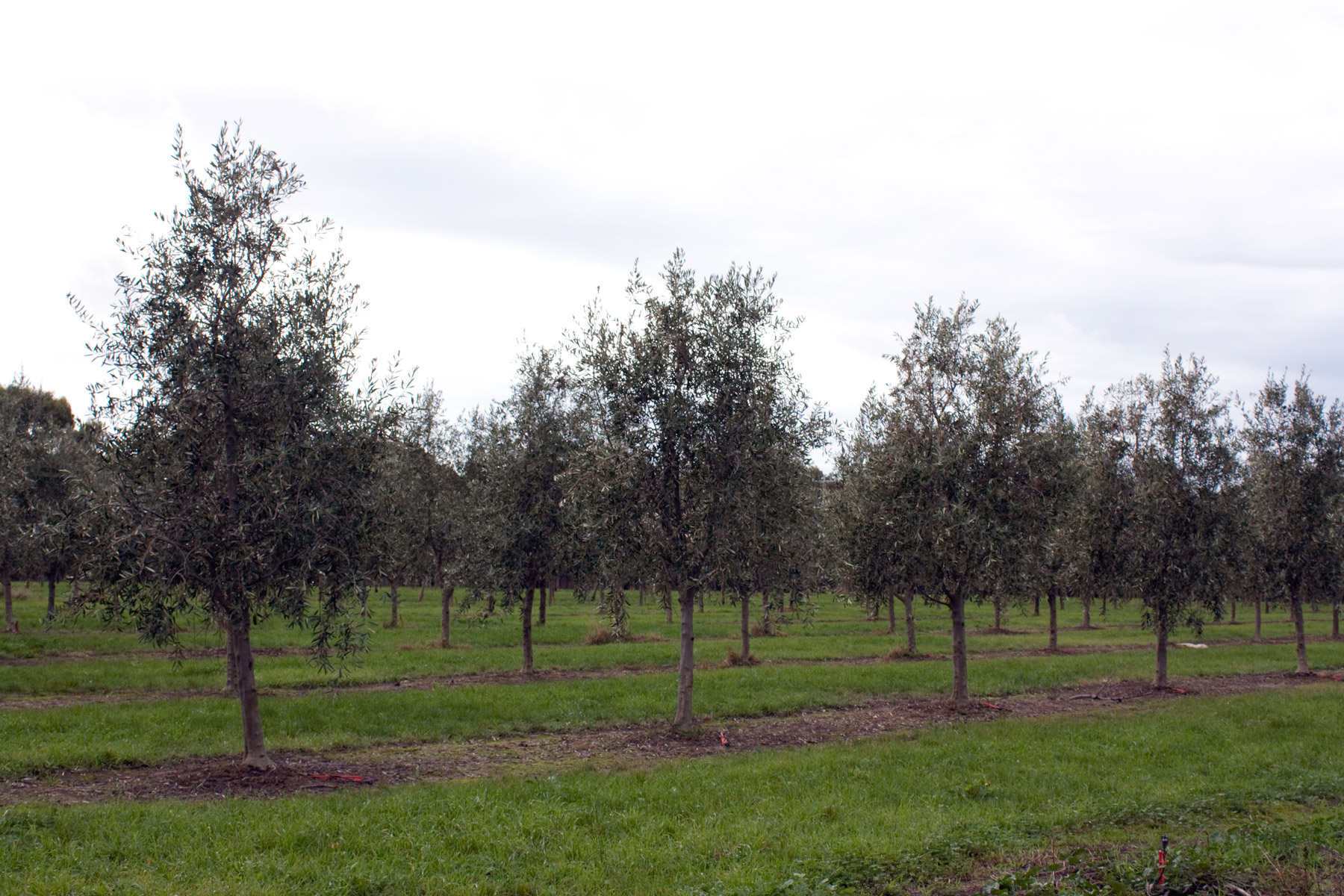
There is a particular kind of Australian olive grove: twenty or thirty acres on a ridge somewhere within a couple of hours of a capital city, planted from scratch in the last thirty years by somebody who was not born a farmer. A thousand trees, give or take. A shed with a small press or an arrangement with one down the road. A stall, a website, a mailing list. It is one of the most instructive small businesses in the whole olive world, because it survives on none of the things the big producers rely on.
How olives got to Australia
Olives arrived early — trees were planted in New South Wales and around Adelaide in the first half of the nineteenth century, and some of those South Australian plantings were serious commercial attempts, not curiosities. Then the industry more or less went to sleep for a century while the country got on with wool, wheat and wine. What woke it was the 1990s: a wave of investment plantings, a lot of confident projections, and a domestic market that had suddenly discovered olive oil.
The correction that followed was brutal and useful. Plenty of the big investor groves changed hands or came out. What remained was a genuine industry with two distinct halves: a modern, efficient, mechanically harvested sector that competes on cost and consistency, and several hundred small growers who cannot compete on either and had to find another way to exist.
The small-grower arithmetic
Start with the hard numbers. A thousand mature trees on a good year might give you a few tonnes of fruit and a few hundred litres of oil per tonne pressed. Sell that at commodity prices and you will not cover the harvest, let alone the pruning, the water, the netting and the twelve months of your life. Sell it at the farm gate, in bottles, with your own name on it, and the same crop becomes a living — not a fortune, but a living.
That is why almost every surviving small Australian grove is really a small food business with olives at the centre. Table olives cured on site, because cured fruit sells for many times the price of oil per kilo. Preserves, dukkah, soap, tapenade. Often a completely separate line — cheese, citrus, stone fruit, honey — that fills the months when the olives are doing nothing. Markets and cellar-door sales rather than wholesale. The oil is the flagship. It is rarely the biggest earner.
Why a full dam beats a good price
Ask an Australian grower what kind of year they are having and they will talk about water before they talk about markets, and they are right to. The olive is drought-hardy, which is not the same as drought-indifferent: it will survive a dry summer by dropping fruit and shutting down, and a stressed tree gives you small olives, poor oil yields and a wretched crop the following year on top of the natural alternate-bearing swing. Rain at the right moment — through flowering and again as the fruit fills — is worth more than any price rise.
The counterweight is that Australia’s dryness is also its great advantage. Low humidity through the growing season means far less fungal disease pressure than in much of the Mediterranean, and in most regions no olive fruit fly to speak of, which is a gift no European grower gets for free. Clean fruit, picked in autumn and pressed within hours, is the whole basis of Australia’s quality reputation.
| Small farm-gate grove | Commercial Australian orchard | |
|---|---|---|
| Scale | Hundreds to a couple of thousand trees | Tens of thousands of trees, often hedgerow |
| Harvest | Hand, nets, small shakers; family and friends | Over-the-row machines, contract crews |
| Milling | Shared or contract mill, sometimes hours away | On-site or dedicated mill, fruit pressed same day |
| Main income | Bottled oil, table olives, preserves, visitors | Bulk and branded oil at wholesale |
| Biggest risk | One bad season with no reserves | Price, currency and yield swings at volume |
| Advantage | Story, freshness, direct relationship | Cost, consistency, scale, testing regime |
What to take from it
- Buy at the gate if you can. Farm-gate oil in Australia is often only weeks old, which is a freshness you simply cannot buy in a supermarket.
- Ask when it was pressed, not when it was bottled. Bottling dates are close to meaningless; harvest dates are not.
- Autumn is new-oil season. April to June is the harvest, so the freshest Australian oil reaches shelves through winter — the opposite of the European calendar.
- Expect variation. A small grove’s oil will taste different year to year. That is a sign of honesty, not of inconsistency.
- Try the table olives. Small Australian producers cure some of the most interesting fruit anywhere, and it never leaves the region.
- Judge the oil, not the acreage. Size tells you nothing about quality in either direction — see what extra virgin actually guarantees.
Australian olive growing: common questions
When is the olive harvest in Australia?
Roughly April to June, with the exact window depending on region, variety and the style of oil wanted. Being in the southern hemisphere, Australia’s new-season oil arrives about six months out of step with Europe’s.
Can a thousand olive trees support a family?
Not on oil sales alone at wholesale prices. Small groves make a living by selling direct at the farm gate and by diversifying — table olives, preserves, other crops, visitors. The oil is usually the flagship product rather than the main earner.
Where in Australia do olives grow best?
The temperate southern arc: South Australia, Victoria, inland and southern New South Wales, and the south-west of Western Australia. Winters need enough cold to set flower buds; summers need to be dry.
Is Australian olive oil good quality?
Generally yes, and for structural reasons: a dry growing season means clean fruit and little disease, harvest is mechanised and fast, and the industry adopted a strict domestic standard with both chemical and sensory testing.
Why do olive crops vary so much year to year?
Olives are naturally alternate bearing — a heavy crop is usually followed by a light one. Add water stress at flowering or fruit fill and the swing gets wider still. Careful pruning and irrigation soften it, but never abolish it.
People romanticise the small grove, and I understand why, but the romance is the wrong lesson. What is genuinely impressive about the Australian smallholder is how clear-eyed they are: they know to the dollar that they cannot win on price, so they do not try. They sell the freshest oil in the country, cure fruit that never reaches a wholesaler, and keep a second crop for the lean year. The ones who fail are almost always the ones who planted a thousand trees expecting the olives alone to pay the mortgage.
Drawn from Australian olive-industry structure, regional growing conditions and the harvest calendar of the southern hemisphere.