Australia’s largest olive oil company is expanding into Argentina.
Australia’s largest olive oil producer once looked hard at Argentina, on the simple arithmetic that land and water there cost a fraction of what they cost on the Murray. The story of where that money finally went says a lot about how modern olive growing actually works.
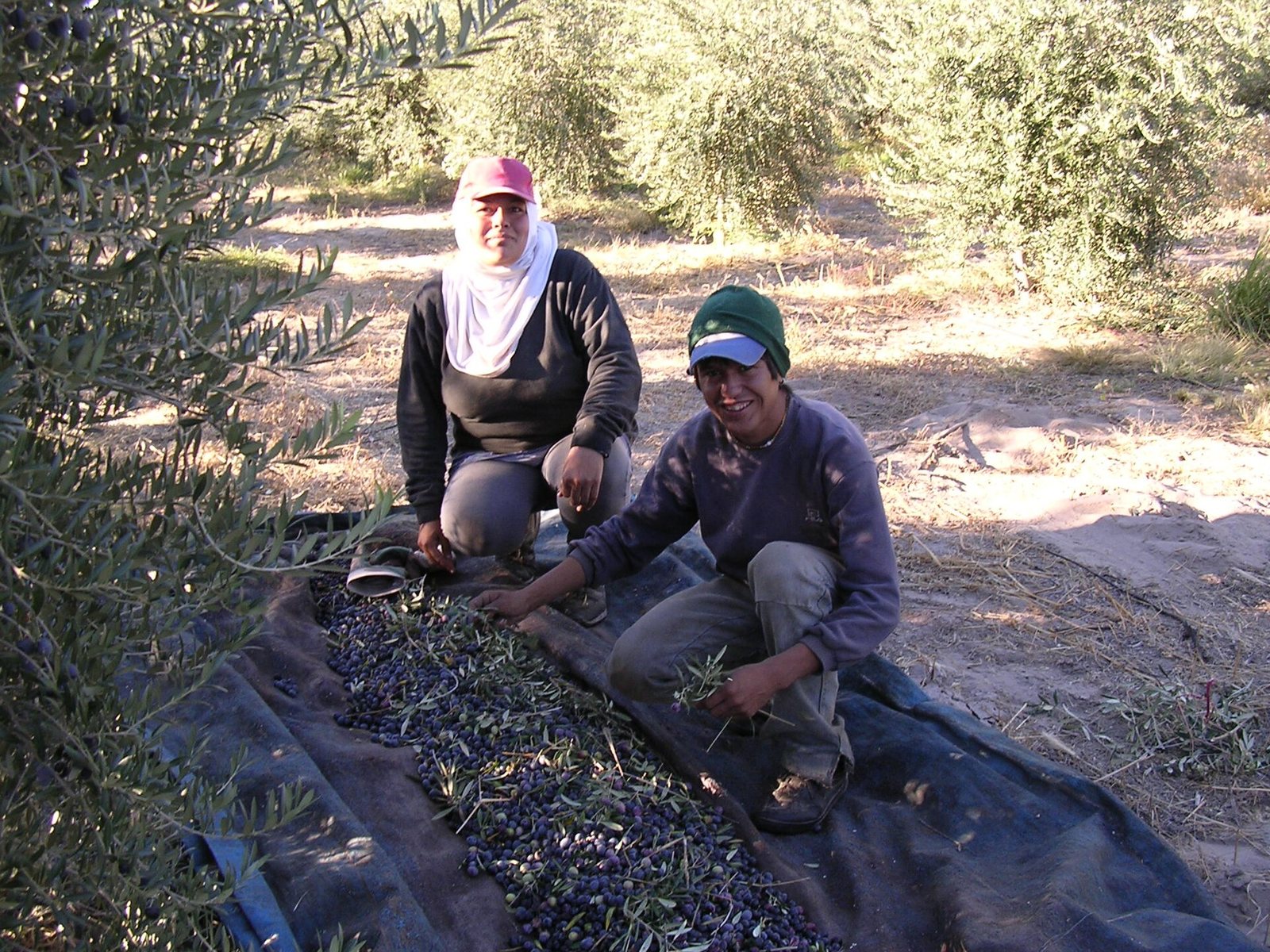
Olives will grow almost anywhere with a Mediterranean-ish climate and no hard freeze. That is the easy part, and it is why the map of olive growing has spread so far beyond the Mediterranean in one generation — Australia, Argentina, Chile, California, South Africa. What decides where a serious producer actually plants is not climate at all. It is the price of a litre of reliable irrigation water, the cost of the land underneath it, and whether a machine can drive down the row.
The water bill is the real crop
In inland Australia, irrigation water is a tradeable entitlement with a market price, and in a dry decade that price can rise faster than anything the fruit is worth. A grower there is not simply buying a farm; they are buying a water right, and its value swings with the weather across an entire basin. When water is dear and its reliability uncertain, the sums on a new planting stop working — the trees will be productive for thirty years, and no one can price the water for thirty years.
That is the calculation that sends people abroad. In the Argentine olive provinces — La Rioja, Catamarca, San Juan, Mendoza — the combined cost of land and water has historically been a small fraction of the Australian equivalent, which is exactly why so much new planting went there in the first place. The catch is that cheap comes with reasons attached: currency instability, export taxes that change with governments, inflation that eats a long-term budget, and a long haul to the buyers who pay best.
| Inland Australia | Argentine olive provinces | California’s Central Valley | |
|---|---|---|---|
| Land & water cost | High — water is a traded entitlement | Historically a small fraction of Australia’s | High land, contested water |
| Water reliability | Swings with basin allocations | Andean meltwater, generally dependable | Groundwater rules tightening |
| Main risk | Drought and allocation cuts | Currency, export policy, inflation | Regulation and land price |
| Distance to premium buyers | Far from Europe and the US | Far from Europe | Inside the largest premium market |
| Harvest window | April–July (southern) | April–July (southern) | September–November (northern) |
| Mechanisation | Fully mechanised hedgerows | Mixed, modernising fast | Fully mechanised hedgerows |
What drought actually does to oil
Growers in a dry year will tell you the oil was the best they had ever made, and they are usually right — but the mechanism is worth understanding before you treat it as a marketing line. Water stress reduces the size and number of fruit, so yield falls. What is left is more concentrated: less water in the flesh, proportionally more oil, and notably more phenolic compounds, the bitter and pungent molecules that carry both flavour and shelf life.
This is so reliable that it has been turned into a technique. Regulated deficit irrigation — deliberately withholding water at set points in the season — is used to push phenol levels up on purpose. So yes, a drought can make sensational oil. It also makes a great deal less of it, and it stresses trees in ways that show up in the following season. Nobody in the trade wishes for a drought twice.
Counter-season is a business model, not a flavour claim
The southern hemisphere picks in roughly April to July, half a year out of step with Spain, Italy and Greece. That is a genuine commercial advantage: in a northern spring, when the previous autumn’s European oil is six or seven months old, a fresh Australian, Chilean or Argentine oil is the youngest thing on the shelf. Freshness is the one quality attribute that no amount of money can fake, and it is the honest basis of the whole southern-hemisphere pitch.
What it is not is a claim that southern oil is inherently better. Buy a northern oil in November and it will be fresher than anything from the south. The lesson for a shopper is simpler than the marketing: match the hemisphere to the season, and read the harvest date rather than the flag.
Where the money finally went
The interesting postscript is that the big Australian expansion abroad ended up not in South America but in California. From the mid-2010s the company built its overseas base in the Sacramento Valley, with a mill, storage and bottling at Woodland — inside the largest premium olive oil market in the world, rather than a long shipping route away from it.
That is the part worth taking away. Cheap land and water are only one line in the sum. Being close to the customer, in a stable currency, under a predictable set of rules, turned out to be worth more than a ninety per cent discount on the dirt. It usually is.
What a buyer should take from all this
- Read the harvest date, not the flag. Between roughly March and August, a southern-hemisphere oil is likely to be the fresher choice.
- Do not pay a premium for ‘drought year’ romance — but do expect a dry-season oil to be more bitter and peppery, and to keep better.
- Big and mechanised is not the same as bad. Hedgerow growing gets fruit to the mill within hours, which is one of the strongest predictors of quality there is.
- Single-origin still matters. A named region and a named mill tell you far more than a country of bottling. See what ‘bottled in Italy’ really means.
Olive growing abroad: common questions
Why would an Australian olive company plant overseas?
Because the binding constraint at home is irrigation water — its price and its reliability — not sunshine. Where land and water cost a fraction as much, a thirty-year planting can be financed on numbers that no longer work domestically.
Does drought really improve olive oil?
It concentrates it. Water stress cuts yield but raises the proportion of oil and of phenolic compounds, which means more bitterness, more pungency and better keeping. Growers use controlled water stress deliberately for exactly this reason — but they lose tonnage doing it.
What is counter-season olive oil?
Oil from the southern hemisphere, harvested around April to July. In a northern spring it is the youngest oil available, because the European crop is by then six or seven months old.
Is Argentina a serious olive oil country?
Yes — the arid provinces of La Rioja, Catamarca, San Juan and Mendoza have substantial modern plantings, and the country is a significant exporter. Much of the crop leaves in bulk rather than under Argentine labels.
Does bulk export mean the oil is poor?
No. Bulk is a trading format, not a grade. Excellent oil moves in tankers every year and is bottled elsewhere — which is precisely why the origin statement on the back label matters more than the name on the front.
Every few years someone announces that the future of olive oil is in the southern hemisphere, and every few years the sums get redone. The honest version is duller and more useful: modern olive growing is an irrigation business with a fruit attached. Whoever can secure reliable water at a sane price, close enough to a market that pays, will grow olives — and the flavour follows from the variety, the picking date and how fast the fruit reaches the mill, not from the flag. When someone sells you a country, ask them for a date instead.
Drawn from company and industry reporting on Australian and Californian olive operations, and published work on deficit irrigation and phenolic content in olive oil.